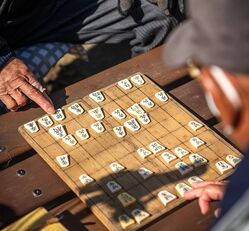
So...do You like to read much? I do, and while sitting at the counter sipping on a brew, I put together a bunch of stories that I happened to find interesting, and share them with you here!

I read on a variety of subjects, but what interests me is simply what interests Me...I'm not expecting you to have exactly the same taste. That said, I'm not just putting out content that is drinks-related... I mean, I Love my IPA but give me some credit, okay? :)  So, on this page I'll present articles on society, business, entertainment, defense, science and technology, and anything else that happens to catch my eye! 


I do make fair effort to present the articles accurately, and the stories are linked back to their original source; you'll see the link at the end in blue. Two more caveats: generally, I'll use stock images and adhere to fair use policies, and wherever I use an outside image I'll make sure to credit & link to that. Secondly, I may include some Amazon Affiliate links where I can gain a commission for any sales--there's no obligation but I'm appreciative of any support.


And by the way, these stories will also be used for my news podcast, conveniently titled 'theTokyoBill news brief', airing twice a week via Podbean or whatever podcast player you might happen to prefer. This is a short-form newscast just to showcase what I found interesting recently on Japan. Hope you enjoy it. ^^


More of a podcast fan? No worries!

theTokyoBill news brief

Instead of scrolling and reading, you'd prefer to listen to my news briefs, in short-form podcast episodes! Twice weekly, hear what I've found interesting on Japan. You can access the podcast directly on Podbean, or on a number of other podcast platforms, including iTunes, YouTube, Amazon, Spotify and more!

theTokyoBill weekly

A companion podcast to theTokyoBill news brief, each Saturday I release a single story...a fuller exploration of a subject I find interesting I hope you find worthy of your time. On various platforms, including SoundCloud and TuneIn Radio.


theTokyoBill weekly -- stories on Japan, told from Japan :)

August 2026

...for the week ending Aug 29, 2026


Avant-garde artist Yayoi Kusama dies at 97

Image via The Japan News


Yayoi Kusama, the Japanese avant-garde artist whose polka-dot sculptures, mirror installations, and pumpkin works made her one of the most internationally recognized artists of the twentieth and twenty-first centuries, died on August 14 at a Tokyo hospital at the age of 97 from multiple organ failure.


Born in Matsumoto, Nagano Prefecture in 1929, Kusama experienced visual and auditory hallucinations from childhood, transforming them into art. She relocated to the United States in 1957, where she gained recognition for paintings, sculptures, and provocative performances before returning to Japan in 1973.


She was awarded the Order of Culture in 2016 and opened her own museum in Shinjuku in 2017. A former curator recalled visiting her in hospital a year or two before her death and finding her still painting, convinced the work in front of her was the best she had ever done.

Japan's miracle font turns ten, supporting children with learning differences

A typeface designer at Osaka-based font maker Morisawa has spent the past decade watching the UD Digital Textbook font — known as the miracle font — quietly transform the learning experiences of children with low vision and learning disabilities across Japan. Yumi Takata began developing the typeface in 2007 after meeting children whose volunteer caregivers were hand-copying enlarged textbooks because conventional fonts were too difficult to read.


After eight years of development, incorporating feedback from children with low vision and developmental dyslexia, the font was released in 2016. It features soft, rounded strokes that closely match handwritten characters, reducing confusion over hooks, sweeps, and stops.


By 2020 it had been adopted by four textbook publishers, and it is now also included in Windows 10 as standard. Takata said her vision of true universal design is a world where every student can choose a typeface suited to their individual needs.

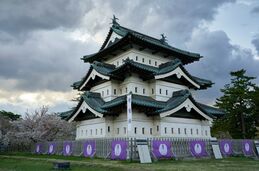
11,800 volunteers pull 360-tonne Hirosaki Castle keep

Around 1,800 volunteers gathered in late August to help pull the keep of Hirosaki Castle in Aomori Prefecture roughly two meters toward its original position, using a traditional Japanese building-relocation technique called hikiya in which structures are placed on rollers and moved intact.


The keep, a nationally designated important cultural property, had been shifted from its base in 2015 to allow earthquake-damaged wall repairs, with over 2,000 stones restacked in their original positions.


With the wall completed, officials invited the public to help pull the keep back, receiving around 8,000 applications from across Japan and overseas. Rotating teams of 80 heaved on 30-meter ropes, moving the structure over a two-day period.


The full symbolic pull of around 5 meters will involve about 4,100 people through the end of August, with machinery completing the remaining distance by the end of the year.


Cranial fossils discovered in Hokkaido more than two decades ago have been formally identified as a new genus and species of armored dinosaur, named Nipponopelta yezoensis — the first ankylosaur ever formally described from Japan. The fossils, including a partial skull, vertebra, and teeth found in Yubari City, were initially recognized as nodosaurid but their precise classification remained unresolved until researchers used three-dimensional CT scanning to digitally reconstruct previously invisible sections of the skull, including the inner ear and lower jaw. Phylogenetic analysis places Nipponopelta yezoensis among derived North American and European nodosaurids rather than Asian relatives, suggesting its ancestors dispersed across wide geographic areas. Habitat reconstruction indicates the animal preferred coastal or estuarine environments, consistent with its discovery in marine deposits. The findings were published in Cretaceous Research.


Via Sci.News

A Japanese language school in Osaka has introduced multilingual traffic safety measures following the death of a 22-year-old Nepali student, Mina Pandey, who was struck by a vehicle at an intersection in Ikuno Ward in June last year after reportedly failing to understand a Japanese stop sign. School head Yoshiteru Tsujimoto, 78, has stood at the intersection around 20 times since the accident, holding signs in English, Vietnamese, and Japanese to warn cyclists. The school now subsidizes bicycle helmets, holds traffic safety classes, and sends regular alerts via Line messaging groups. Osaka police have replaced some signage with bilingual stop signs and held over 280 traffic safety classes for foreign residents last year. The proportion of traffic accidents involving foreign nationals in Osaka Prefecture has risen from around 3 percent in 2016 to over 5 percent in 2025.

Japan's environment ministry will begin surveying animal cafes as early as next month following recommendations from an expert panel and growing concern about hygiene and animal welfare. The fact-finding exercise will first establish basic information — including the number of establishments and species kept — before examining compliance with animal welfare laws covering space requirements and cleaning practices. On-site inspections may follow at facilities appearing to breach regulations. A 2025 WWF Japan survey found some cafes kept endangered and CITES-listed species, and detected pathogenic bacteria in multiple facilities. Animal welfare groups say the businesses prioritize customer entertainment over the animals' wellbeing, with many creatures subjected to constant handling, noise, and unfamiliar contact throughout the day. Japan has hundreds of such cafes, where visitors can interact with animals ranging from cats and owls to capybaras and reptiles.

Haneda Airport's Terminal 1 has unveiled a new North Satellite Facility ahead of its September launch, marking the first large-scale expansion of the terminal since it opened in 1993. The hybrid structure incorporates around 1,800 cubic meters of timber alongside steel to reduce environmental impact, and features six boarding gates, a lounge, a children's area, and free self-driving passenger vehicles. Airport users exceeded 90 million last year for the first time, with takeoffs and landings reaching the upper capacity limit of around 490,000. Baggage handling time has increased due to earlier terminal expansions, contributing to flight delays and prompting Japanese airlines to extend the domestic check-in baggage deadline from 20 to 30 minutes before departure from September. The government is targeting 60 million foreign visitors annually by 2030.

Japan's farm ministry is preparing to buy back rice released from national stockpiles in 2025, as a surge in private-sector inventories and an expected bumper 2026 harvest push retail prices sharply lower, threatening farmers with a price collapse. Average supermarket rice prices have fallen to around 3,000 yen per five kilograms, down from over 4,000 yen during shortages in 2024. The ministry released around 590,000 tons of stockpiled rice last year to ease supply shortfalls caused by extreme summer heat, and private inventories hit a record 2.43 million tons by end of June. In step with falling wholesale prices, convenience store chains Lawson, Seven-Eleven, and FamilyMart are all cutting onigiri prices from late September, while conveyor-belt sushi chain Kura Sushi has lowered its entry-level plate price from September 4.


From NHK World and Japan Today

Fukushima decontamination soil is to be reused at national government branch offices in Sendai and Saitama, the first expansion of the program outside Tokyo, where the soil has already been used at 12 sites including the prime minister's office since July last year. Around 14.46 million cubic meters of removed soil and waste are currently stored at an interim storage facility near the crippled Fukushima Daiichi plant, which must by law be moved outside Fukushima Prefecture by March 2045. The government aims to recycle 75 percent of relatively low-radioactivity soil for public works, though progress toward that target remains slow. Officials in Saitama have asked for full disclosure of monitoring data and public consultation before use, while the mayors of towns hosting the interim facility welcomed the expansion as progress toward eventual final disposal.

Japan will make no additional releases of crude oil from its national reserves in September or October, Economy Minister Ryosei Akazawa confirmed, as the country manages supply disruptions caused by the rerouting of tankers away from the Bab el-Mandeb Strait to the longer Suez Canal route. September procurement is expected to fall to around 80 percent of last year's monthly average, compared to 100 percent in August, due to the Suez route taking around 55 days to reach Japan versus 21 to 23 days via the shorter strait route. Previously decided reserve releases that have not yet been utilized will be drawn on to compensate for the September shortfall. Procurement is expected to return to normal monthly levels in October as the rerouted shipments arrive.

A growing number of Japanese companies are adopting English-letter names or increasing the proportion of English in their corporate identities as they seek greater international recognition. Around a quarter of the roughly 21,500 companies that changed their names in 2025 adopted Latin script names or incorporated more English into existing names. Hitachi Construction Machinery is rebranding as Landcros Corp. in April 2027, with baseball star Shohei Ohtani tapped as its promotional face, while major seafood company Maruha Nichiro became Umios Corp. in March. For listed companies, English names have the added advantage of attracting more attention from overseas investors. Analysts note that while internationally facing names improve global recognition, they can reduce clarity about a company's activities for domestic customers and require effort to build internal attachment among Japanese employees.

Japan's only high-frequency trading firm based in Tokyo, Dharmacapital, has relocated all staff to Singapore, leaving the Japanese capital without a single such firm operating locally. The move was driven partly by Japan's comparatively high income tax rates relative to other Asian financial hubs including Singapore and Hong Kong, where most of Dharmacapital's peers are already based. The firm's CEO said the primary motivation was better access to global markets, and emphasized that Japan remains its most important trading market. Market-making firms, which include high-frequency traders, accounted for over 30 percent of trading value on the Tokyo Stock Exchange in recent years. Tokyo has long struggled to establish itself as a major international financial hub, with high taxes and language barriers frequently cited by finance professionals as deterrents.

Researchers at Kobe University have identified bacterial strains in river sediment that can remove so-called forever chemicals – PFAS – from contaminated water, offering a potentially low-cost biological approach to tackling one of the world's most persistent environmental pollutants. The team collected samples from the Samondo River in Osaka Prefecture, isolated strains capable of reducing concentrations of perfluorooctane sulfonate and perfluorooctanoic acid, banned substances in Japan, and confirmed that one strain also significantly reduced PFAS levels in leachate from an industrial waste landfill. The study found that adsorption of PFAS onto bacterial cells plays a key role in the removal process. PFAS are notoriously difficult to break down due to the strength of their carbon-fluorine bonds and accumulate in water, soil, and wildlife globally. The findings were published in the Journal of Water Process Engineering.

...for the week ending Aug 22, 2026


Ninja theme park suddenly closes amid owner's real estate scandal

Ise Ninja Kingdom, a samurai and ninja theme park in Mie Prefecture, abruptly closed in late July, posting a brief renovation notice before going silent — with no construction activity visible, its website stripped bare, and its operator withdrawing from the local tourism association. The park, which opened in 1993 and rebranded under its current name in 2019 after being acquired by real estate investment firm Kyosei Bank Group, had seen attendance plummet in recent months following a scandal surrounding Kyosei's crowdfunding-style investment product Minna de Oyasan, accused by critics of operating as a Ponzi scheme. Nearly 1,200 plaintiffs have filed a lawsuit seeking around 11.4 billion yen from the company (nearly 72M USD). While the park itself was not directly implicated in the alleged wrongdoing, its association with Kyosei damaged its reputation and visitor numbers. The renovation notice is widely interpreted as a holding position while the company navigates its legal and reputational troubles.

Traditional bullfighting draws crowds during Bon holidays

Traditional bullfighting drew around 500 visitors to Okinoshima Town on Nishinoshima Island in Shimane Prefecture during the Bon holiday period, with twelve locally raised bulls weighing between 500 and 900 kilograms competing in bouts where pairs lock horns and push against each other until one turns away.


The event was held at night to avoid the summer heat. The tradition is said to have originated around 800 years ago to console retired Emperor Go-Toba, who was exiled to the Oki Islands.


Three tournaments are held in the town each year, attracting tourists and returning locals alike. The events are considered an important part of the island's cultural heritage and one of the more unusual traditional spectacles in western Japan.

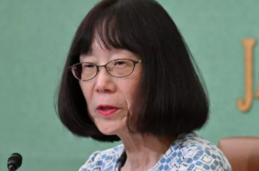
US sanctions Japanese ICC chief

Image via France24


The United States has sanctioned Tomoko Akane, the Japanese judge who serves as president of the International Criminal Court, alongside a senior ICC trial lawyer, drawing a sharp rebuke from Tokyo. Japan's Foreign Ministry called the move deeply regrettable and reaffirmed its consistent support for the ICC as essential to upholding the rule of law and accountability for serious international crimes. The sanctions freeze any US-held assets and bar the individuals from entering the country, and because most globally active banks have ties to the US financial system, they could effectively exclude the targets from international financial networks. Legal experts warned that if sanctions extend to cutting off the ICC from dollar transactions, ongoing investigations and prosecutions could be materially hampered. The move places Japan in a delicate position as a major ICC donor and close US ally, with analysts noting that sanctioning a Japanese judge carries particular symbolic weight in pressuring other US allies that support the court.

Around 40 percent of teachers at Japanese public schools are completely prohibited from using personal smartphones at school, yet roughly the same proportion of those under a full ban admit to using their personal phones for work-related tasks, according to a July survey of 370 teachers. The survey, released on August 20, found that when partial restrictions are included, around 63 percent of teachers face some limitation on personal phone use, rising to around 70 percent at elementary and junior high schools. The most common reasons teachers use personal phones include communicating with colleagues, looking up information, and responding quickly in emergencies — functions for which official work phones have been provided to only a small minority of schools. Researchers noted that blanket prohibition policies are difficult to implement practically given the demands of the school environment.

A Chinese restaurant chain operating in Sendai has apologized after its franchise outlet displayed congratulatory flower stands bearing the names of figure skating legend Yuzuru Hanyu and former Prime Minister Yukio Hatoyama at its opening — without obtaining permission from either. The restaurant, part of China's YangGuoFu chain, acknowledged on social media that none of the flowers had been sent by the individuals named. The outlet said it would remain closed through Friday while implementing measures to prevent a recurrence and apologized for harming the reputations of those involved. Yuzuru Hanyu is a Sendai native and two-time Olympic champion, and is one of Japan's most celebrated athletes. The incident drew significant attention given the prominence of the names used and the sensitivity around unauthorized commercial association with public figures.

A 32-year-old man from Isesaki, Gunma Prefecture, has been arrested after attempting to rob a Lawson convenience store by approaching the register, producing a knife, and saying "Okane wo kudasai" — meaning "Money, please" — in an unnaturally stiff accent. The store manager refused and the man fled without taking any cash. Police linked him to a successful robbery the previous day at another Isesaki convenience store using identical methods, netting around 30,000 yen. The suspect, Atsushi Goto, told police he deliberately spoke in an unusual manner to sound like a foreigner and disguise his identity. The tactic echoes a similar incident in Aichi Prefecture in which a Japanese man attempted a robbery while claiming to be Vietnamese, highlighting a concerning pattern of crimes designed to deflect suspicion onto Japan's foreign resident population.

A University of Tokyo research group has identified structural and functional abnormalities in a specific subregion of the globus pallidus — a deep brain structure — in patients with schizophrenia, and found similar changes in adolescents reporting psychotic experiences. MRI scans of around 100 individuals including schizophrenia patients and healthy controls, alongside over 200 adolescents in the Tokyo Teen Cohort study, showed that the external segment of the globus pallidus was significantly larger in schizophrenia patients relative to the internal segment, and displayed abnormal connectivity with brain regions involved in visuospatial processing. In adolescents, greater psychotic experiences correlated with larger external segment volume and stronger connectivity with related visual processing areas. The findings suggest changes in this brain region may be detectable before the onset of schizophrenia, potentially opening new paths for early risk assessment and therapeutic research. The study was published in Molecular Psychiatry.

A 48-year-old father from Nagoya has been rebuked by police after leaving his seven-year-old son unattended at the sixth station of the Fujinomiya Trail on Mount Fuji and continuing toward the summit with his older child. The boy was found sitting alone on a bench by a mountain hut worker at around 7:40 a.m., with rain falling and fog beginning to gather. Based on typical hiking times, the father likely left the boy around 4:30 a.m. and was near the eighth station — a roughly three-hour hike away — when contacted by police. The boy was unharmed and sheltered in the hut until reunited with his father. The father said he deeply regretted making a rash decision. Police urged hikers to pace their climbs to the least physically capable member of their group and reminded them that leaving a party member behind is unacceptable under any circumstances.

Japan carried out its first execution since Prime Minister Sanae Takaichi took office on Friday, hanging Sunao Takami, 58, who was convicted of killing five people and injuring ten in a gasoline arson attack on an Osaka pachinko parlor in 2009. His death sentence was finalized in 2016 after courts rejected defense arguments that mental illness had affected his judgment, finding him mentally competent and criminally responsible. Justice Minister Hiroshi Hiraguchi said the decision was made after careful consideration. Japan's capital punishment system has faced growing scrutiny following the 2024 exoneration of Iwao Hakamata after more than four decades on death row. A 2024 government poll found over 80 percent of Japanese citizens consider the death penalty unavoidable. According to Amnesty International, 145 countries have now abolished capital punishment or effectively ceased carrying out executions.

A 77-year-old hunter from Sunagawa, Hokkaido, has filed a damages lawsuit against the national government and Hokkaido Prefecture after discovering that one of four hunting rifles seized from him years ago had been destroyed by prosecutors in 2019 — before his legal challenge against the seizure had even begun. Haruo Ikegami originally had his firearms license revoked after shooting a bear at the request of city authorities in 2018, a decision the Supreme Court ruled unlawful in March 2026. When the remaining three rifles were returned, Ikegami learned that prosecutors had disposed of the fourth — the rifle used in the bear cull and kept as a memento from a fellow hunter — after he signed a document during the investigation that he says he did not understand to mean the weapon would be destroyed. He is seeking combined damages of around 430,000 yen.

A 12-year-old British girl who disappeared from her family's rental accommodation in Tokyo was found safe around 59 hours later after walking into a police box in Yokohama on August 15. Carmelita Lakdesha Paul had left the property without her phone or passport and with only a small amount of cash. Security footage traced her journey to Yokohama Station on the morning of August 13, and police issued a public appeal for information the following day. Officers said she spent time at an internet cafe and visited locations in Yokohama connected with anime she was interested in before saying she began to miss her parents and decided to seek help at the police box. She was unharmed and reunited with her family. Police said there was no evidence of criminal involvement in her disappearance.

The first N700ST high-speed train destined for Taiwan's rail network arrived at the port of Kaohsiung on August 15, shipped from Japan as part of a 124 billion yen contract between Taiwan High Speed Rail and a Japanese consortium led by Hitachi and Toshiba. The N700ST is derived from the latest-generation N700S Shinkansen platform and features lithium-ion battery backup capable of keeping the train moving at reduced speed during power cuts, active suspension for improved comfort, and a maximum operating speed of 300 kilometers per hour. Assembly and static testing are expected to be completed by November 2026, with dynamic testing to follow through April 2027. Commercial service is targeted for July 2027, with all 12 trains progressively entering operation by September 2028. Once the full fleet is deployed, peak-time capacity on Taiwan's high-speed network is expected to increase by around 25 percent.

Japan Airlines and All Nippon Airways will coordinate their flight schedules on the Haneda-Okayama route from late October, marking the first time Japan's two major carriers have adjusted their domestic schedules in cooperation to avoid overlap. The move follows a May report by a transport ministry expert panel confirming that schedule coordination would not violate antitrust law if certain conditions are met. The airlines are responding to a combination of pressures including intensifying domestic competition, rising fuel and maintenance costs, and a decline in business travel. The coordination is expected to reduce instances where both carriers schedule flights on the same route at the same time, improving operational efficiency without reducing overall service on the route.

An international conference has agreed to raise the annual catch quota for large Pacific bluefin tuna — fish weighing 30 kilograms or more — by 25 percent for two years from 2027, while reducing the quota for smaller fish by 6 percent. The agreement was reached at an online reconvening of the conference after talks in Nagasaki in July failed when Mexico unexpectedly objected. Mexico subsequently reversed its position following talks with Japan. An official decision is expected at a general meeting in late 2026, after individual quota adjustments among participating countries are finalized. Japanese fishers have seen hauls surge close to the annual cap in recent seasons, forcing some to suspend fishing. If the quota increase is confirmed, observers say it could increase domestic bluefin supply and put downward pressure on prices, potentially making the premium fish more accessible to consumers.

...for the week ending Aug 15, 2026


New Katsu Curry Index aims to show how weak the yen really is

A senior strategist at Bank of New York Mellon has developed the Katsu Curry Index as an alternative to the Big Mac Index, using the price of pork cutlet curry at CoCo Ichibanya — the world's largest curry chain with around 1,500 outlets globally — to measure the yen's purchasing power against other currencies. At a rate of around 159 yen per dollar in currency markets, the index suggests the yen should trade at around 62 yen per dollar to reflect true purchasing power parity — a far sharper gap than the Big Mac Index's implied rate of around 80 yen. Strategist Geoff Yu argues that katsu curry better reflects how currency weakness feels in everyday Japanese life than a burger does. He warned that if the price of staple meals like curry or ramen becomes prohibitive in Japan, public pressure for a policy shift will likely grow.

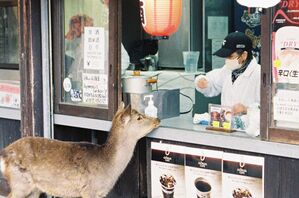
Nara's deer population hits record high as animals spill into neighborhoods

Nara Park's deer population has reached a record high of 1,687, up around 220 from the previous year, with animals increasingly appearing in residential neighborhoods and farmland as the park becomes more crowded. Rising tourist numbers are contributing to growth, with deer cracker sales expected to hit record levels and visitors regularly offering prohibited foods that boost pregnancy rates. The deer are a nationally protected natural monument with deep cultural and religious significance, making population management politically and legally complex. Crop damage, traffic incidents, and the animals' growing presence in residential areas are creating mounting concerns for local residents, even as the deer remain one of Nara's most beloved attractions for the millions of visitors who come each year.

Japan sends F-2 fighters to India for first time in signal to China

Japan's Defense Ministry plans to dispatch Air Self-Defense Force F-2 fighter jets to India for the first time for a joint military exercise, with a ministry source describing the move as intended to check China. Defense Minister Koizumi will discuss the dispatch and broader defense cooperation with his Indian counterpart in mid-August, including potential exports of the Unicorn communications antenna and joint development of AI-equipped defense drones. Koizumi is also expected to meet Australian and New Zealand defense ministers in Canberra on August 18, where Japan will pitch its upgraded Mogami-class frigate to New Zealand, which has shortlisted it alongside Britain's Type 31 frigate for a final selection expected in 2027.

A shrine dedicated to stuffed toys has opened in the Miyamacho district of Nantan, Kyoto Prefecture, offering blessings and memorial services for plush companions and the people who cherish them. Nuigurumi Jinja — literally plushie shrine — was created by Komichi Horiguchi, who operates a stuffed toy repair hospital in Osaka Prefecture and has treated over 25,000 plushies from Japan and abroad. The project was inspired partly by a terminally ill owner who asked what would happen to their beloved toys after death. The shrine features a torii gate with rounded ears, stuffed animal guardian lion-dogs, and a small purification basin for plushies. It received a divided spirit from Reimei Shrine in Kyoto, which conducts memorial services for dolls — the first time in Reimei Shrine's long history that it had transferred a divided spirit. Revenue will support forest preservation and animal protection.

A 23-year-old Mexican national has been arrested at Tokyo's Haneda Airport after allegedly attempting to smuggle around 200 lizards into Japan from South Korea, hidden inside socks in a suitcase. One lizard died. The reptiles included nine arboreal alligator lizards, a species endemic to the highlands of Mexico whose international trade is restricted under CITES. The suspect told police he purchased the animals in Mexico for around $3 to $5 each and admitted to the offense. Tokyo police acted on an anonymous tip received in late July. The case is part of a broader pattern of exotic animal smuggling involving Japan: a 2025 WWF report found Japan ranks among the world's top five importers for six of nine reptile species examined, suggesting significant underlying demand beyond individual smuggling incidents.

A Japanese research team has found traces of genetic mutations caused by colibactin — a toxin produced by certain E. coli strains — in nearly half of colorectal cancer cases analyzed in Japan, with the figure rising to around 70 percent among patients who developed the disease under the age of 40. The team, including researchers from the University of Osaka and the University of Tokyo, analyzed 200 colorectal cancer patients and found that colibactin damaged and mutated key cancer-related genes including APC, BRAF, and TP53. The findings, published in Nature Genetics, suggest a bacterial pathway to colorectal cancer development that researchers hope to address through elimination therapy, drawing a parallel with the established use of H. pylori eradication in gastric cancer prevention. The team said it aims to identify the infection route of colibactin-producing E. coli and develop a prevention method.

Japan has formally protested Vladimir Putin's visit to the disputed Kuril Islands, with Prime Minister Sanae Takaichi calling the trip absolutely unacceptable and Foreign Minister Toshimitsu Motegi summoning the Russian ambassador in Tokyo. Known in Japan as the Northern Territories, the four islands were seized by the Soviet Union in the final days of World War II and have prevented the two countries from signing a formal peace treaty ever since. Takaichi said the islands are part of Japan both historically and under international law. Putin, on his first visit to the islands, declared they were recognized as Russian in international documents and described Japan's post-invasion sanctions against Russia as unprovoked. Around 17,000 Japanese formerly lived on the islands, which today house around 20,000 Russian citizens. Relations between the two countries soured sharply after Japan imposed sanctions following Russia's 2022 invasion of Ukraine.

At least eight people died as torrential rain struck Chiba Prefecture near Tokyo on Thursday and early Friday, with the Japan Meteorological Agency issuing its highest Level 5 warnings for both rainfall and landslides across more than a third of the prefecture's municipalities — the first time such warnings have been issued since new disaster weather information services were introduced in May. Evacuation orders were issued for over 400,000 people at one point, with around 7,000 stranded at Narita Airport overnight and roughly 1,700 sheltering at the prefectural government building. Over 200 evacuation centers were opened across four prefectures. Hourly rainfall in Chiba's Chuo Ward reached 115 millimeters Thursday night — roughly a full month's average August rainfall — while Sakura recorded a three-hour total of nearly 190 millimeters, a local record. Power outages affected around 45,000 homes, and train services on multiple JR East lines were suspended. Heavy rain was expected to continue through Saturday.

The city of Tamura in Fukushima Prefecture is offering Hercules beetle larvae as gifts through its hometown tax donation program, with donors contributing around 21,000 yen receiving a single larva weighing roughly 150 grams that will grow into an adult beetle over more than a year. Tamura has built its identity around insects since declaring itself the Natural Kingdom of Rhinoceros Beetles in 1988, and established a city insect division in 2023 headed by an imaginary beetle character. The mayor says the thriving insect population demonstrates the quality of Tamura's natural environment, a message aimed at countering reputational damage from the 2011 Fukushima nuclear disaster and showing the area has recovered as a healthy, livable place.

Newly appointed director of the National Museum of Nature and Science in Tokyo's Taito Ward, paleontologist Makoto Manabe recently gave a tour of the museum's dinosaur exhibits, using its Tyrannosaurus rex and Triceratops skeletons to explain how scientific understanding of these animals has shifted dramatically. The connected Triceratops skull and body have helped revise ideas about forelimb posture, with elbows now thought held closer to the body than older reconstructions showed. On T. rex, Manabe explained that growth markers in fossilized bone may not correspond to single years as previously assumed, pushing lifespan estimates from around 28 to potentially 40 years. He also raised the possibility that Nanotyrannus was a distinct species, and noted that while melanosomes have revealed colors in around ten dinosaur species, the true appearance of T. rex remains unknown. Life-size skeletons, fossils, and the Exploring the Mysteries of Dinosaur Evolution rooms are on permanent display in the museum's Global Gallery.

A Russian-linked hacker group called RansomHouse has leaked around 200,000 personal records stolen from major Japanese frozen food company Nichirei onto the dark web, according to cybersecurity firm S&J. The compromised data includes phone numbers and personal details of Nichirei employees and business partners. The leak follows a severe cyberattack last month that disrupted the company's logistics network, causing widespread delays in frozen food deliveries to supermarkets and restaurants across Japan. Nichirei declined to comment in detail on the breach. The incident is part of a broader pattern of ransomware and data extortion attacks targeting Japanese companies, with the involvement of a Russia-linked group drawing particular attention given Japan's support for Ukraine.

Japan's H3 rocket successfully launched the Michibiki No. 7 positioning satellite into orbit around 29 minutes after liftoff from Tanega-shima Space Center in Kagoshima Prefecture. The launch follows the loss of Michibiki No. 5 during an H3 failure last year, which left the planned seven-satellite constellation incomplete, with the government now targeting six operational satellites. Michibiki satellites improve GPS positioning accuracy for smartphones and enhance earthquake alert delivery in areas with poor reception, supporting Japan's push for a more self-reliant geolocation system. The successful launch restores momentum to the Michibiki program and represents a significant step forward for the H3 rocket, which has faced scrutiny following last year's high-profile failure.

...for the week ending Aug 8, 2026


Two workers killed in Kumamoto mall blast after boss ordered them back inside

Image via The Japan Times


Management of general goods store Habita are facing public backlash following the deaths of two employees in a gas explosion at Aeon Mall in Kumamoto Prefecture following a magnitude 6.8 earthquake on July 28, after a manager ordered them to re-enter the evacuated building to move cash into the store safe. One victim has been identified as 22-year-old Kurumi Otake, who told a relative outside the mall she had been instructed to go back in. Habita's sales director publicly apologized at her wake, acknowledging the instructions were inappropriate and saying "looking back now, it was not worth a life." The two workers were among seven people killed at the mall and 38 overall in the earthquake. Most occupants had evacuated shortly after the quake, which collapsed portions of the mall, but some employees remained inside when the explosion occurred roughly an hour later.

Kuwaki Shiho wins Women's British Open in playoff for first major overseas title

Image via Nikkei Asia


Japanese golfer Shiho Kuwaki claimed her first major title outside Japan by winning the Women's British Open in a playoff on Sunday, becoming the third Japanese player to win the tournament after Hinako Shibuno in 2019 and Miyu Yamashita in 2025, and the seventh Japanese woman to win an LPGA major.


The 23-year-old entered the final round three strokes behind the leader but played steadily as rivals struggled, making birdies on the second, ninth, and thirteenth holes to finish at 5 under par, level with Germany's Esther Henseleit. In the playoff, both players parred the first hole before Kuwaki saved par on the second while Henseleit made a bogey, handing Kuwaki the title.

Galaxy Express 999 to return with new theatrical film after nearly 50 years

Image via Sentieri Selvaggi


A new theatrical Galaxy Express 999 film has been announced nearly 50 years after the original manga began serialization in 1977, with Toei Animation returning to produce and veteran director Rintaro — who helmed the acclaimed 1979 theatrical film — providing the story concept. The announcement came via a surprise post on the official X account of the late creator Leiji Matsumoto, with his eldest daughter Makiko describing the project as the fulfillment of a lifelong dream.


Galaxy Express 999 follows a young boy in a transhumanist future who boards a legendary interstellar train in search of immortality, encountering loss and questions about what makes life meaningful along the way. The 1979 film is widely considered one of the finest works in anime history and influenced generations of animators and storytellers worldwide.

A shrine dedicated to stuffed toys has opened in the Miyamacho district of Nantan, Kyoto Prefecture, offering blessings and memorial services for plush companions and the people who cherish them. Nuigurumi Jinja — literally plushie shrine — was created by Komichi Horiguchi, who operates a stuffed toy repair hospital in Osaka Prefecture and has treated over 25,000 plushies from Japan and abroad. The project was inspired partly by a terminally ill owner who asked what would happen to their beloved toys after death. The shrine features a torii gate with rounded ears, stuffed animal guardian lion-dogs, and a small purification basin for plushies. It received a divided spirit from Reimei Shrine in Kyoto, which conducts memorial services for dolls — the first time in Reimei Shrine's long history that it had transferred a divided spirit. Revenue will support forest preservation and animal protection.

A 23-year-old Mexican national has been arrested at Tokyo's Haneda Airport after allegedly attempting to smuggle around 200 lizards into Japan from South Korea, hidden inside socks in a suitcase. One lizard died. The reptiles included nine arboreal alligator lizards, a species endemic to the highlands of Mexico whose international trade is restricted under CITES. The suspect told police he purchased the animals in Mexico for around $3 to $5 each and admitted to the offense. Tokyo police acted on an anonymous tip received in late July. The case is part of a broader pattern of exotic animal smuggling involving Japan: a 2025 WWF report found Japan ranks among the world's top five importers for six of nine reptile species examined, suggesting significant underlying demand beyond individual smuggling incidents.

A Japanese research team has found traces of genetic mutations caused by colibactin — a toxin produced by certain E. coli strains — in nearly half of colorectal cancer cases analyzed in Japan, with the figure rising to around 70 percent among patients who developed the disease under the age of 40. The team, including researchers from the University of Osaka and the University of Tokyo, analyzed 200 colorectal cancer patients and found that colibactin damaged and mutated key cancer-related genes including APC, BRAF, and TP53. The findings, published in Nature Genetics, suggest a bacterial pathway to colorectal cancer development that researchers hope to address through elimination therapy, drawing a parallel with the established use of H. pylori eradication in gastric cancer prevention. The team said it aims to identify the infection route of colibactin-producing E. coli and develop a prevention method.

Japan has formally protested Vladimir Putin's visit to the disputed Kuril Islands, with Prime Minister Sanae Takaichi calling the trip absolutely unacceptable and Foreign Minister Toshimitsu Motegi summoning the Russian ambassador in Tokyo. Known in Japan as the Northern Territories, the four islands were seized by the Soviet Union in the final days of World War II and have prevented the two countries from signing a formal peace treaty ever since. Takaichi said the islands are part of Japan both historically and under international law. Putin, on his first visit to the islands, declared they were recognized as Russian in international documents and described Japan's post-invasion sanctions against Russia as unprovoked. Around 17,000 Japanese formerly lived on the islands, which today house around 20,000 Russian citizens. Relations between the two countries soured sharply after Japan imposed sanctions following Russia's 2022 invasion of Ukraine.

At least eight people died as torrential rain struck Chiba Prefecture near Tokyo on Thursday and early Friday, with the Japan Meteorological Agency issuing its highest Level 5 warnings for both rainfall and landslides across more than a third of the prefecture's municipalities — the first time such warnings have been issued since new disaster weather information services were introduced in May. Evacuation orders were issued for over 400,000 people at one point, with around 7,000 stranded at Narita Airport overnight and roughly 1,700 sheltering at the prefectural government building. Over 200 evacuation centers were opened across four prefectures. Hourly rainfall in Chiba's Chuo Ward reached 115 millimeters Thursday night — roughly a full month's average August rainfall — while Sakura recorded a three-hour total of nearly 190 millimeters, a local record. Power outages affected around 45,000 homes, and train services on multiple JR East lines were suspended. Heavy rain was expected to continue through Saturday.

The city of Tamura in Fukushima Prefecture is offering Hercules beetle larvae as gifts through its hometown tax donation program, with donors contributing around 21,000 yen receiving a single larva weighing roughly 150 grams that will grow into an adult beetle over more than a year. Tamura has built its identity around insects since declaring itself the Natural Kingdom of Rhinoceros Beetles in 1988, and established a city insect division in 2023 headed by an imaginary beetle character. The mayor says the thriving insect population demonstrates the quality of Tamura's natural environment, a message aimed at countering reputational damage from the 2011 Fukushima nuclear disaster and showing the area has recovered as a healthy, livable place.

Newly appointed director of the National Museum of Nature and Science in Tokyo's Taito Ward, paleontologist Makoto Manabe recently gave a tour of the museum's dinosaur exhibits, using its Tyrannosaurus rex and Triceratops skeletons to explain how scientific understanding of these animals has shifted dramatically. The connected Triceratops skull and body have helped revise ideas about forelimb posture, with elbows now thought held closer to the body than older reconstructions showed. On T. rex, Manabe explained that growth markers in fossilized bone may not correspond to single years as previously assumed, pushing lifespan estimates from around 28 to potentially 40 years. He also raised the possibility that Nanotyrannus was a distinct species, and noted that while melanosomes have revealed colors in around ten dinosaur species, the true appearance of T. rex remains unknown. Life-size skeletons, fossils, and the Exploring the Mysteries of Dinosaur Evolution rooms are on permanent display in the museum's Global Gallery.

A Russian-linked hacker group called RansomHouse has leaked around 200,000 personal records stolen from major Japanese frozen food company Nichirei onto the dark web, according to cybersecurity firm S&J. The compromised data includes phone numbers and personal details of Nichirei employees and business partners. The leak follows a severe cyberattack last month that disrupted the company's logistics network, causing widespread delays in frozen food deliveries to supermarkets and restaurants across Japan. Nichirei declined to comment in detail on the breach. The incident is part of a broader pattern of ransomware and data extortion attacks targeting Japanese companies, with the involvement of a Russia-linked group drawing particular attention given Japan's support for Ukraine.

Japan's H3 rocket successfully launched the Michibiki No. 7 positioning satellite into orbit around 29 minutes after liftoff from Tanega-shima Space Center in Kagoshima Prefecture. The launch follows the loss of Michibiki No. 5 during an H3 failure last year, which left the planned seven-satellite constellation incomplete, with the government now targeting six operational satellites. Michibiki satellites improve GPS positioning accuracy for smartphones and enhance earthquake alert delivery in areas with poor reception, supporting Japan's push for a more self-reliant geolocation system. The successful launch restores momentum to the Michibiki program and represents a significant step forward for the H3 rocket, which has faced scrutiny following last year's high-profile failure.

...for the week ending Aug 8, 2026


Two workers killed in Kumamoto mall blast after boss ordered them back inside

Image via The Japan Times


Management of general goods store Habita are facing public backlash following the deaths of two employees in a gas explosion at Aeon Mall in Kumamoto Prefecture following a magnitude 6.8 earthquake on July 28, after a manager ordered them to re-enter the evacuated building to move cash into the store safe. One victim has been identified as 22-year-old Kurumi Otake, who told a relative outside the mall she had been instructed to go back in. Habita's sales director publicly apologized at her wake, acknowledging the instructions were inappropriate and saying "looking back now, it was not worth a life." The two workers were among seven people killed at the mall and 38 overall in the earthquake. Most occupants had evacuated shortly after the quake, which collapsed portions of the mall, but some employees remained inside when the explosion occurred roughly an hour later.

Kuwaki Shiho wins Women's British Open in playoff for first major overseas title

Image via Nikkei Asia


Japanese golfer Shiho Kuwaki claimed her first major title outside Japan by winning the Women's British Open in a playoff on Sunday, becoming the third Japanese player to win the tournament after Hinako Shibuno in 2019 and Miyu Yamashita in 2025, and the seventh Japanese woman to win an LPGA major.


The 23-year-old entered the final round three strokes behind the leader but played steadily as rivals struggled, making birdies on the second, ninth, and thirteenth holes to finish at 5 under par, level with Germany's Esther Henseleit. In the playoff, both players parred the first hole before Kuwaki saved par on the second while Henseleit made a bogey, handing Kuwaki the title.

Galaxy Express 999 to return with new theatrical film after nearly 50 years

Image via Sentieri Selvaggi


A new theatrical Galaxy Express 999 film has been announced nearly 50 years after the original manga began serialization in 1977, with Toei Animation returning to produce and veteran director Rintaro — who helmed the acclaimed 1979 theatrical film — providing the story concept. The announcement came via a surprise post on the official X account of the late creator Leiji Matsumoto, with his eldest daughter Makiko describing the project as the fulfillment of a lifelong dream.


Galaxy Express 999 follows a young boy in a transhumanist future who boards a legendary interstellar train in search of immortality, encountering loss and questions about what makes life meaningful along the way. The 1979 film is widely considered one of the finest works in anime history and influenced generations of animators and storytellers worldwide.

Jo Nagai, a 10-year-old elementary school student from Kobe, has attracted international scientific attention after designing a series of experiments suggesting that butterflies can retain memories formed during their caterpillar stage despite undergoing complete metamorphosis. Jo raised Asian swallowtail butterflies at home and noticed that those he had raised from caterpillars returned to his hand after release, unlike wild butterflies. He exposed caterpillars to lavender scent paired with a mild vibration stimulus, then tested the adult butterflies in a Y-shaped maze. Around 70 percent avoided the lavender scent, suggesting retained memories. Even more remarkably, he reported that offspring and grandchildren of the conditioned butterflies also showed avoidance behavior, a finding he attributed to possible transgenerational epigenetic inheritance. His 33-page research paper was presented at the International Congress of Entomology in Kobe. The work has not yet been published in a peer-reviewed journal, and independent verification is needed, but scientists have praised his careful methodology and curiosity-driven approach.

Japan's Cabinet has approved a plan to cut the consumption tax rate on food and beverages from 8 percent to 1 percent for a two-year period beginning April 2027, but the proposal has drawn a cautious response from consumers, retailers, and the restaurant industry. Consumers worry that stores may use the cut as cover to raise prices, or that the eventual return to 8 percent will create a larger shock than the temporary relief justifies. Retailers selling premium food products doubt the cut will meaningfully drive foot traffic. Restaurants face a particular concern: dine-in meals are expected to remain taxed at 10 percent, widening the gap with takeout food and potentially shifting consumers away from eating out. Some restaurant operators say they cannot lower prices during the cut period because the anticipated return to higher rates in two years makes any reduction difficult to sustain.

The University of Tokyo has suspended a professor for three days after an internal investigation confirmed the academic had embedded the string "six four Tiananmen" in the source code of graduate school admissions websites between 2020 and November 2023. The string, a reference to the June 4, 1989 Tiananmen Square crackdown, would likely trigger China's internet censorship system and block access to the pages for users within China, potentially preventing Chinese international students from viewing admissions information. The issue came to light through reporting by the newspaper Mainichi Shimbun in 2024, prompting the university to investigate. The disciplinary measure was dated July 29 this year. In a statement, the university described the conduct as absolutely unacceptable and unbecoming of a faculty member, though some observers have noted the three-day suspension is a relatively light penalty given the potential impact on prospective students.

Tokyo is planning to double its bike lane and cycling infrastructure network from around 436 kilometers to 900 kilometers by 2030, and further to 1,800 kilometers during the 2040s, following a surge in safety complaints from residents after new traffic fines introduced in April pushed cyclists off sidewalks and onto busy roads. Under the new system, riders can be fined 6,000 yen for offenses including sidewalk cycling and riding against traffic. The city is focusing on dedicated roadside lanes at least 1.5 meters wide on roads where vehicle speeds exceed 40 kilometers per hour, with shared-road configurations used on narrower or slower streets. Officials say expanding cycling infrastructure will benefit not only safety but also urban mobility and commercial activity. Tokyo is coordinating the rollout with broader road improvement initiatives, including underground utility line projects that free up roadside space.

Mitsubishi Heavy Industries is moving ahead with development of small modular reactors in Japan's first major private-sector effort to deploy next-generation nuclear technology. The company will receive government support during the development process, which will include seismic and tsunami countermeasures. The push aligns with a government energy policy, approved by Cabinet last year, calling for the maximum use of nuclear power. Ministers reconfirmed their commitment to developing and installing next-generation reactors last week. SMRs are considered advantageous over conventional large reactors due to lower installation costs, greater design flexibility, and enhanced passive safety features. Similar projects are underway in Canada and the US. Mitsubishi Heavy's SMRs are targeted to enter operation in the 2040s.

More than 2,000 donated Japanese picture books translated into Ukrainian were among around 8 million books destroyed when Russian kamikaze drones struck a Ranok Publishing House warehouse in Kharkiv last weekend. The books were part of a project led by Japanese publisher Shiko-sha and the nonprofit Ukraine House Japan, which donated 5,000 copies of five translated titles to Ukrainian schools and hospitals following Russia's full-scale invasion in 2022. Among the destroyed titles was a book by former Empress Michiko recounting her first mountain climb with her family. Ranok said more than half of the planned 5,000 copies had already been distributed or were stored safely in a separate warehouse. The strike burned over 10,000 square meters of the facility. Russian attacks on Ukrainian publishing infrastructure have continued to mount, with at least 35 publishing houses damaged since the invasion began. Ranok said it would continue publishing activities despite the destruction.

Kirin Holdings has announced plans to acquire Canadian supplement company Jamieson Wellness as a wholly owned subsidiary for approximately US$1.6 billion (CDN$2.5 billion, marking its most significant move yet to establish a presence in North America's supplement market. The acquisition price of C$45.75 per share represents a 27 percent premium over Jamieson's 20-day volume-weighted average price prior to negotiations becoming public. Founded in 1922 and headquartered in Toronto, Jamieson is Canada's largest vitamin, mineral, and supplement brand with growing international reach. The deal follows Kirin's acquisition of Australian supplement giant Blackmores in 2023 and its full takeover of Japan's Fancl in 2024, representing a sustained push to build health science into a second major revenue pillar alongside its core beer and beverage business. Completion requires approval from at least two-thirds of Jamieson shareholders and Canadian court clearance, with Kirin expecting to finalize the transaction after October this year.

Japanese schools and universities are grappling with a rapid increase in AI-generated assignments, with around 36 percent of university students in a 2025 survey admitting to submitting machine-translated work without modification. A Carnegie Mellon University and Oxford study found that just 10 to 15 minutes of AI assistance measurably reduced participants' perseverance and independent problem-solving ability once help was removed, with the proportion giving up on unsolved problems nearly doubling. An MIT study found lower brain activity and poor recall among students who used generative AI to write essays, with engagement failing to recover even when participants later wrote without assistance. Educators are urging a return to handwriting and independent thought, while some teachers are introducing AI-free assessment periods to rebuild foundational cognitive skills before students begin using the tools.

Filipino domestic workers are establishing a strong reputation in Japan's growing housekeeping services market, valued for their professionalism, communication skills, and careful training. A 2015 legal change allowed foreign nationals to provide housekeeping services in so-called national strategic special zones, with Filipino workers quickly becoming a preferred choice. Tokyo-based Pinay International now has over 200 full-time Filipino staff working across four prefectures, with extensive pre- and post-arrival training and housing support provided. Bears, not the animals but another major housekeeping operator, has also employed over 200 Filipino staff since 2017. Japan's housekeeping market continues to expand alongside growth in dual-income households, with the Ministry of Economy, Trade and Industry maintaining a certification system to ensure quality of worker treatment and wages. The CEO of Pinay International described foreign talent as likely to play a key role in revitalizing Japan.

Three lions at Tama Zoological Park in western Tokyo have died of suspected heat-related causes since late July, all three showing severe dehydration and multiple organ failure consistent with heatstroke. Illness spread through the park's pride of sixteen lions from around July 18, with ten ultimately requiring treatment. Staff had been attempting to cool the animals using fans, water spraying, and medication. The lion exhibit has been suspended since July 23 while the metropolitan government monitors the remaining animals. The deaths come amid one of Japan's most severe summers on record, with multiple regions already recording their first official "kokushobi" — days exceeding 40 degrees Celsius — under the new weather agency designation introduced earlier this year.

Japan is resuming imports of Canadian crude oil as disruption to Strait of Hormuz shipping caused by the US-Israeli conflict with Iran forces Asian nations to urgently diversify energy supply. A tanker chartered by Exxon Mobil loaded with Trans Mountain pipeline crude departed Vancouver this week bound for Japan, with the cargo purchased by Eneos, Japan's largest refiner. Before the conflict began in February, Japan imported over 90 percent of its oil through Hormuz. The Trans Mountain pipeline has been running at nearly full capacity since late 2025, with exports to Asia now accounting for around 77 percent of total Vancouver oil exports, up from around 51 percent in 2024. India, Malaysia, and Singapore have also returned to buying Canadian crude since the conflict began. Japan has separately cut its economic growth forecast to 0.9 percent partly due to elevated oil prices.

...for the week ending Aug 1, 2026


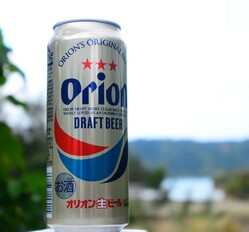
Okinawa's Orion Beer makes first overseas investment with UK partnership

Image via Just Drinks


Okinawa-based Orion Beer has made its first overseas investment, committing £1 million to UK distribution partner Sunrise Beverages to expand production capacity and accelerate brand growth across Britain, with European expansion planned as a next step. The two companies began a licensed production and sales arrangement in September 2025, with Orion Beer now available at Waitrose and a range of pubs and food-service venues across the UK.


Founded in 1957, Orion holds a dominant position in its home market of Okinawa and has increasingly focused on international growth in recent years, with export volumes rising by around 400 percent over the past six years. The UK investment marks a strategic shift toward an asset-light international model, with the company positioning Orion as Japan's premium lager of choice in British supermarkets and hospitality venues.

Beloved mystery novelist Keigo Higashino dies at 68

Image via Tokyo Weekender


Keigo Higashino, one of the most widely read and internationally celebrated Japanese mystery novelists of his generation, has died at 68 from cancer. The author of over 100 novels and story collections, Higashino made his literary debut in 1985 while still working as an engineer and went on to become a defining figure in Japanese popular fiction, with his work translated into more than 40 languages across over 40 countries and regions. His novel The Devotion of Suspect X, which won Japan's prestigious Naoki Prize in 2006, became particularly beloved across Asia and was one of 57 works translated into the Thai language alone over the past decade. His death was reported as breaking news in China and South Korea, where his work had cultivated vast readerships. Higashino said throughout his career that the core of his writing was always the portrayal of human nature — its contradictions, its darkness, and its capacity for change — and his characters were widely praised for their psychological depth and authenticity. He is survived by a literary legacy that his publishers say transcended cultural and national borders.


Get your own copy of The Devotion of Suspect X -- in English -- here on Amazon!

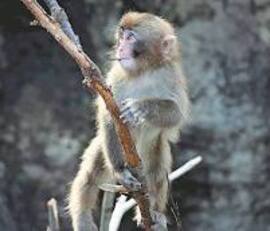
Viral monkey Punch turns one, receives over 2,500 birthday messages worldwide

Image via TheJapan News


Punch, the Japanese macaque who became an international social media sensation after being given a stuffed orangutan plushie by zookeepers at Ichikawa City Zoo following abandonment by his mother, turned one year old on Sunday. The zoo received over 2,500 birthday messages from Japan and abroad, including hand-drawn illustrations from well-wishers in Britain and Canada, which will be displayed at the zoo until the end of August. The zoo held no dedicated birthday event in keeping with its policy of treating all animals equally. Zookeepers say Punch has made significant social progress over the past year, recently beginning to spend time with other baby monkeys and developing his place within the troop. The zoo's visitor numbers rose by over 100,000 in fiscal 2025 driven by Punch's viral popularity, though a crypto-promotion stunt in which two US nationals trespassed into his enclosure earlier this year led to their arrests and fines.


Are you a Punch fan? Get your very own Punch the Monkey coffee mug!

Japan's population of Japanese residents has dropped below 120 million for the first time in 42 years, falling to around 119.7 million as of January 1 according to the Ministry of Internal Affairs and Communications — a 17th consecutive annual decline since the country's population peaked in 2009. 


The fertility rate fell to a new record low of 1.14 in 2025, marking the tenth straight year of decline, while the number of births dropped to just over 670,000, the lowest figure since records began in 1899. Japan's median age now stands at nearly 50, giving it the second-oldest population in the world after Monaco. Partially offsetting the decline, the foreign resident population reached a record 4 million — up nearly 10 percent year-on-year — bringing the total population including foreign nationals to around 124 million. Inbound migration hit a record high of nearly 721,000 in 2025, with young adults in their 20s and early 30s making up the largest share of foreign residents. 


A small but notable bright spot emerged in the form of Tokyo's AI-powered government matchmaking app TOKYO Enmusubi, which has facilitated 265 marriages since launching in September 2024 and currently has around 760 couples in serious relationships among its 16,000 registered members.

Japan's Cabinet has approved a plan to cut the consumption tax rate on food and beverages from 8 percent to 1 percent for a two-year period beginning April 2027, but the proposal has drawn a cautious response from consumers, retailers, and the restaurant industry. Consumers worry that stores may use the cut as cover to raise prices, or that the eventual return to 8 percent will create a larger shock than the temporary relief justifies. Retailers selling premium food products doubt the cut will meaningfully drive foot traffic. Restaurants face a particular concern: dine-in meals are expected to remain taxed at 10 percent, widening the gap with takeout food and potentially shifting consumers away from eating out. Some restaurant operators say they cannot lower prices during the cut period because the anticipated return to higher rates in two years makes any reduction difficult to sustain.

The University of Tokyo has suspended a professor for three days after an internal investigation confirmed the academic had embedded the string "six four Tiananmen" in the source code of graduate school admissions websites between 2020 and November 2023. The string, a reference to the June 4, 1989 Tiananmen Square crackdown, would likely trigger China's internet censorship system and block access to the pages for users within China, potentially preventing Chinese international students from viewing admissions information. The issue came to light through reporting by the newspaper Mainichi Shimbun in 2024, prompting the university to investigate. The disciplinary measure was dated July 29 this year. In a statement, the university described the conduct as absolutely unacceptable and unbecoming of a faculty member, though some observers have noted the three-day suspension is a relatively light penalty given the potential impact on prospective students.

Tokyo is planning to double its bike lane and cycling infrastructure network from around 436 kilometers to 900 kilometers by 2030, and further to 1,800 kilometers during the 2040s, following a surge in safety complaints from residents after new traffic fines introduced in April pushed cyclists off sidewalks and onto busy roads. Under the new system, riders can be fined 6,000 yen for offenses including sidewalk cycling and riding against traffic. The city is focusing on dedicated roadside lanes at least 1.5 meters wide on roads where vehicle speeds exceed 40 kilometers per hour, with shared-road configurations used on narrower or slower streets. Officials say expanding cycling infrastructure will benefit not only safety but also urban mobility and commercial activity. Tokyo is coordinating the rollout with broader road improvement initiatives, including underground utility line projects that free up roadside space.

Mitsubishi Heavy Industries is moving ahead with development of small modular reactors in Japan's first major private-sector effort to deploy next-generation nuclear technology. The company will receive government support during the development process, which will include seismic and tsunami countermeasures. The push aligns with a government energy policy, approved by Cabinet last year, calling for the maximum use of nuclear power. Ministers reconfirmed their commitment to developing and installing next-generation reactors last week. SMRs are considered advantageous over conventional large reactors due to lower installation costs, greater design flexibility, and enhanced passive safety features. Similar projects are underway in Canada and the US. Mitsubishi Heavy's SMRs are targeted to enter operation in the 2040s.

More than 2,000 donated Japanese picture books translated into Ukrainian were among around 8 million books destroyed when Russian kamikaze drones struck a Ranok Publishing House warehouse in Kharkiv last weekend. The books were part of a project led by Japanese publisher Shiko-sha and the nonprofit Ukraine House Japan, which donated 5,000 copies of five translated titles to Ukrainian schools and hospitals following Russia's full-scale invasion in 2022. Among the destroyed titles was a book by former Empress Michiko recounting her first mountain climb with her family. Ranok said more than half of the planned 5,000 copies had already been distributed or were stored safely in a separate warehouse. The strike burned over 10,000 square meters of the facility. Russian attacks on Ukrainian publishing infrastructure have continued to mount, with at least 35 publishing houses damaged since the invasion began. Ranok said it would continue publishing activities despite the destruction.

Kirin Holdings has announced plans to acquire Canadian supplement company Jamieson Wellness as a wholly owned subsidiary for approximately US$1.6 billion (CDN$2.5 billion, marking its most significant move yet to establish a presence in North America's supplement market. The acquisition price of C$45.75 per share represents a 27 percent premium over Jamieson's 20-day volume-weighted average price prior to negotiations becoming public. Founded in 1922 and headquartered in Toronto, Jamieson is Canada's largest vitamin, mineral, and supplement brand with growing international reach. The deal follows Kirin's acquisition of Australian supplement giant Blackmores in 2023 and its full takeover of Japan's Fancl in 2024, representing a sustained push to build health science into a second major revenue pillar alongside its core beer and beverage business. Completion requires approval from at least two-thirds of Jamieson shareholders and Canadian court clearance, with Kirin expecting to finalize the transaction after October this year.

Japanese schools and universities are grappling with a rapid increase in AI-generated assignments, with around 36 percent of university students in a 2025 survey admitting to submitting machine-translated work without modification. A Carnegie Mellon University and Oxford study found that just 10 to 15 minutes of AI assistance measurably reduced participants' perseverance and independent problem-solving ability once help was removed, with the proportion giving up on unsolved problems nearly doubling. An MIT study found lower brain activity and poor recall among students who used generative AI to write essays, with engagement failing to recover even when participants later wrote without assistance. Educators are urging a return to handwriting and independent thought, while some teachers are introducing AI-free assessment periods to rebuild foundational cognitive skills before students begin using the tools.

Filipino domestic workers are establishing a strong reputation in Japan's growing housekeeping services market, valued for their professionalism, communication skills, and careful training. A 2015 legal change allowed foreign nationals to provide housekeeping services in so-called national strategic special zones, with Filipino workers quickly becoming a preferred choice. Tokyo-based Pinay International now has over 200 full-time Filipino staff working across four prefectures, with extensive pre- and post-arrival training and housing support provided. Bears, not the animals but another major housekeeping operator, has also employed over 200 Filipino staff since 2017. Japan's housekeeping market continues to expand alongside growth in dual-income households, with the Ministry of Economy, Trade and Industry maintaining a certification system to ensure quality of worker treatment and wages. The CEO of Pinay International described foreign talent as likely to play a key role in revitalizing Japan.

Three lions at Tama Zoological Park in western Tokyo have died of suspected heat-related causes since late July, all three showing severe dehydration and multiple organ failure consistent with heatstroke. Illness spread through the park's pride of sixteen lions from around July 18, with ten ultimately requiring treatment. Staff had been attempting to cool the animals using fans, water spraying, and medication. The lion exhibit has been suspended since July 23 while the metropolitan government monitors the remaining animals. The deaths come amid one of Japan's most severe summers on record, with multiple regions already recording their first official "kokushobi" — days exceeding 40 degrees Celsius — under the new weather agency designation introduced earlier this year.

Japan is resuming imports of Canadian crude oil as disruption to Strait of Hormuz shipping caused by the US-Israeli conflict with Iran forces Asian nations to urgently diversify energy supply. A tanker chartered by Exxon Mobil loaded with Trans Mountain pipeline crude departed Vancouver this week bound for Japan, with the cargo purchased by Eneos, Japan's largest refiner. Before the conflict began in February, Japan imported over 90 percent of its oil through Hormuz. The Trans Mountain pipeline has been running at nearly full capacity since late 2025, with exports to Asia now accounting for around 77 percent of total Vancouver oil exports, up from around 51 percent in 2024. India, Malaysia, and Singapore have also returned to buying Canadian crude since the conflict began. Japan has separately cut its economic growth forecast to 0.9 percent partly due to elevated oil prices.

...for the week ending Aug 1, 2026


Japanese population falls below 120 million for first time in 42 years

Japan's population of Japanese residents has dropped below 120 million for the first time in 42 years, falling to around 119.7 million as of January 1 according to the Ministry of Internal Affairs and Communications — a 17th consecutive annual decline since the country's population peaked in 2009.


The fertility rate fell to a new record low of 1.14 in 2025, marking the tenth straight year of decline, while the number of births dropped to just over 670,000, the lowest figure since records began in 1899. Japan's median age now stands at nearly 50, giving it the second-oldest population in the world after Monaco. Partially offsetting the decline, the foreign resident population reached a record 4 million — up nearly 10 percent year-on-year — bringing the total population including foreign nationals to around 124 million. Inbound migration hit a record high of nearly 721,000 in 2025, with young adults in their 20s and early 30s making up the largest share of foreign residents.


A small but notable bright spot emerged in the form of Tokyo's AI-powered government matchmaking app TOKYO Enmusubi, which has facilitated 265 marriages since launching in September 2024 and currently has around 760 couples in serious relationships among its 16,000 registered members.

Okinawa's Orion Beer makes first overseas investment with UK partnership

Image via Just Drinks


Okinawa-based Orion Beer has made its first overseas investment, committing £1 million to UK distribution partner Sunrise Beverages to expand production capacity and accelerate brand growth across Britain, with European expansion planned as a next step. The two companies began a licensed production and sales arrangement in September 2025, with Orion Beer now available at Waitrose and a range of pubs and food-service venues across the UK.


Founded in 1957, Orion holds a dominant position in its home market of Okinawa and has increasingly focused on international growth in recent years, with export volumes rising by around 400 percent over the past six years. The UK investment marks a strategic shift toward an asset-light international model, with the company positioning Orion as Japan's premium lager of choice in British supermarkets and hospitality venues.

Beloved mystery novelist Keigo Higashino dies at 68

Image via Tokyo Weekender


Keigo Higashino, one of the most widely read and internationally celebrated Japanese mystery novelists of his generation, has died at 68 from cancer. The author of over 100 novels and story collections, Higashino made his literary debut in 1985 while still working as an engineer and went on to become a defining figure in Japanese popular fiction, with his work translated into more than 40 languages across over 40 countries and regions. His novel The Devotion of Suspect X, which won Japan's prestigious Naoki Prize in 2006, became particularly beloved across Asia and was one of 57 works translated into the Thai language alone over the past decade. His death was reported as breaking news in China and South Korea, where his work had cultivated vast readerships. Higashino said throughout his career that the core of his writing was always the portrayal of human nature — its contradictions, its darkness, and its capacity for change — and his characters were widely praised for their psychological depth and authenticity. He is survived by a literary legacy that his publishers say transcended cultural and national borders.


Get your own copy of The Devotion of Suspect X -- in English -- here on Amazon!

Viral monkey Punch turns one, receives over 2,500 birthday messages worldwide

Image via TheJapan News


Punch, the Japanese macaque who became an international social media sensation after being given a stuffed orangutan plushie by zookeepers at Ichikawa City Zoo following abandonment by his mother, turned one year old on Sunday. The zoo received over 2,500 birthday messages from Japan and abroad, including hand-drawn illustrations from well-wishers in Britain and Canada, which will be displayed at the zoo until the end of August. The zoo held no dedicated birthday event in keeping with its policy of treating all animals equally. Zookeepers say Punch has made significant social progress over the past year, recently beginning to spend time with other baby monkeys and developing his place within the troop. The zoo's visitor numbers rose by over 100,000 in fiscal 2025 driven by Punch's viral popularity, though a crypto-promotion stunt in which two US nationals trespassed into his enclosure earlier this year led to their arrests and fines.


Are you a Punch fan? Get your very own Punch the Monkey coffee mug!

Japanese authorities are suspected of intervening in foreign exchange markets to support the yen after the currency fell to its weakest level against the US dollar since the mid-1980s, prompting a sudden sharp reversal in the USD/JPY pair that rippled across global currency markets. The move, marked by large unexplained orders consistent with past official intervention patterns, briefly pushed the yen higher and triggered broad US dollar weakness, lifting currencies including the Canadian dollar to the psychologically significant 1.4000 level against the greenback. Bank of Japan money market data suggested authorities may have deployed several billion dollars in the operation. Japanese finance officials had repeatedly signaled readiness to act against excessive currency volatility. Analysts cautioned that while intervention can counter short-term disorderly moves, the yen's underlying weakness is driven by structural factors including the persistent gap between US and Japanese interest rates and Japan's expansionary fiscal stance — factors that intervention alone cannot resolve. Markets were watching closely for any official confirmation and signals of further action.

Newly released audio recordings featured in a six-episode 30 for 30 podcast series reveal that Ippei Mizuhara, Shohei Ohtani's former interpreter, told an ESPN reporter in March 2024 that Ohtani had knowingly agreed to pay off his gambling debts — a claim he retracted in a second interview less than 24 hours later after the Los Angeles Dodgers fired him and Ohtani's legal team accused him of theft. In the recordings, Mizuhara describes approaching Ohtani for help after his debts with an illegal bookmaker mounted, saying Ohtani was reluctant because he did not trust Mizuhara not to gamble again. Mizuhara is currently serving a nearly five-year prison sentence at a low-security facility in Pennsylvania after pleading guilty to federal charges of bank fraud and tax evasion, having admitted to stealing close to $17 million from Ohtani. He has also been ordered to pay financial restitution to Ohtani and around $1.15 million to the IRS. The recordings provide the most detailed first-person account yet of a scandal that ended what had widely been characterized as a close personal friendship between the two men.

Pokémon Card Stores in Japan have announced the introduction of mandatory facial recognition scanning for all customers wishing to enter, in the latest escalation of anti-scalper measures by The Pokémon Company. The system, announced quietly on the official Pokémon Card Game website on July 24, will detect if the same individual attempts to enter a store more than once in a single day or obtains more than one ticket to queue up for purchases, triggering an alert to staff who may then refuse entry on suspicion of bulk-buying for resale. The facial recognition requirement applies to all shoppers aged six and above, with children under six prohibited from entering without a parent or guardian in any case. Facial and visit data will be retained for an unspecified period before deletion. The move follows a series of earlier anti-scalping measures including Pokémon knowledge quizzes, purchase limits, and the removal of shrink wrap at point of sale. The Pokémon Company indicated that facial recognition has not yet been extended to the larger permanent Pokémon Center stores, though additional regulations are under consideration following the establishment of a Japanese government task force to examine problems within the trading card retail space.

A group of 24 foreign-born naturalized Japanese citizens competing in Japan Rugby League One have filed complaints with the Japan Fair Trade Commission and Tokyo District Court challenging new player eligibility rules that would strip most of them of their current unrestricted Category A status and reclassify them as Category A2 players with reduced match-day squad and on-field playing opportunities. The players, who include former Japan international Timothy Lafaele and five other capped Brave Blossoms players, say they do not oppose the new A1 and A2 categories themselves — introduced to encourage the development of Japanese-born talent — but are seeking transitional protections that would preserve the status of those who earned citizenship and represented Japan under the previous framework. Under the new rules, foreign-born players generally must have completed six years of compulsory education in Japan or earned at least 30 test caps to qualify for the unrestricted A1 category. Speaking at the Foreign Correspondents' Club of Japan, Lafaele argued that players who had committed their lives to Japan, earned citizenship, and worn the Brave Blossoms jersey deserved to be recognized as domestic players. The group's legal representative said talks with League One have recently become more constructive, with the players seeking a transitional arrangement rather than a blocking of the rule changes themselves.

A Japanese government labor panel has recommended raising the average hourly minimum wage by 55 yen — nearly 5 percent — to around 1,176 yen per hour, which would represent the second-largest increase since the panel began making recommendations in fiscal 1978, following last year's record 66-yen rise. The panel cited continued upward momentum in wages across Japan's economy while noting that a slower pace of inflation compared to recent years justified a slightly more modest increase than last year's. Prefectural panels will now begin their own deliberations to set final regional figures, which typically vary based on local economic conditions. The government has set a medium-term target of reaching a national average minimum wage of 1,500 yen — roughly $9.15 — by the early 2030s, a goal that would require continued annual increases at a pace broadly consistent with the current recommendation.

Japan's Maritime Self-Defense Force conducted its first live-fire test of a Tomahawk cruise missile on July 29, launching from the Aegis guided-missile destroyer JS Chokai in the Pacific Ocean with logistical and range support from the US Navy. The test confirmed that the ship's crew could successfully execute launch procedures and that the missile reached its intended target, making Japan the third country outside the US to fire a Tomahawk from a surface warship, after Australia and the Netherlands. Chokai is one of five JMSDF Aegis destroyers being modified to carry Tomahawks under a program budgeted at around 114 billion yen, with Japan also acquiring up to 400 missiles through US Foreign Military Sales at a total cost of around 170 billion yen. Modification work is already underway or contracted for four of the five ships, with the fifth to follow from fiscal 2026. Officials said no further live-fire tests are planned for the remaining ships, as the Chokai test confirmed integration between the Tomahawk system and Japan's combat management systems. Japan's domestic long-range missile development program is expected to provide the primary basis for future expansion of the country's stand-off strike capability beyond the current 400-missile acquisition.

Japanese beer brands and fashion labels are making strong gains in South Korea as the "No Japan" consumer boycott that followed a 2019 trade dispute continues to recede. Draft beer sales for Sapporo and Yebisu each rose by around 30 percent in the first five months of 2026 compared to the same period last year. Similarly, sales of Japanese beer cans at Korean convenience store chain GS25 rose 31 percent in the first half of the year. Sapporo’s own permanent beer stand that opened in Seoul in July 2025 served nearly 100,000 glasses of draft beer across its first year of operation. In fashion, Japanese brands including United Tokyo and Captain Sunshine have opened Seoul flagship stores, with sales of around 20 Japanese labels at one major select shop rising over 50 percent year-on-year. Around 60 percent of buyers of Japanese fashion labels in Korea are in their 20s and 30s, with younger consumers driving the trend. Industry observers attribute the shift to a growing appreciation for Japanese product quality, craftsmanship, and durability, reinforced by a surge in travel to Japan.

A survey by Utsunomiya-based nonprofit Key Design has found that around one in five mothers whose children stopped attending school or became reluctant to do so subsequently quit their jobs — a rate roughly 30 times higher than for fathers, of whom less than 1 percent reported leaving work for the same reason. Among over 1,200 respondents from across the country, nearly all said balancing the situation with employment was difficult, and over 80 percent had thought about quitting. Mothers reported increased tardiness and absences, difficulty concentrating at work, and in many cases ultimately leaving employment, while simultaneously managing communications with schools and searching for support resources. Around half reported income declines and nearly 80 percent reported increased spending on alternative schooling and medical costs, creating a double economic blow for many households. Nearly 500 respondents said their child had expressed a wish to die or disappear, and around 190 reported their child had engaged in self-harm. The nonprofit's director called on companies and society to deepen their understanding of affected parents and create conditions in which they can continue working.

Japan's government will revise permanent residency guidelines from October, with new requirements taking effect for applications from next April under the Takaichi administration's broader push to tighten conditions for foreign nationals. Key additions include an income threshold above the average Japanese household and pension benefit projections equivalent to those earned after 30 years in the employees' pension system, with shortfalls able to be offset by savings and assets. Assessments of Japanese language ability and understanding of Japanese rules will also be factored into the existing "best interests of Japan" criterion. For spouses of Japanese nationals or permanent residents, the minimum marriage duration requirement will rise from three to five years and the residency requirement from one to three years. The changes come alongside earlier reforms including a stricter 10-year residency requirement for naturalization applicants introduced in April, planned fee increases for residency status applications, and a forthcoming online pre-entry travel authorization system for visa-exempt visitors.

A Japanese volunteer soldier is recovering in western Ukraine after losing his left leg below the knee to mortar shrapnel and sustaining severe injuries to his right arm and back during four years of fighting Russian forces. A former member of Japan's Ground Self-Defense Force, the unnamed soldier crossed into Ukraine in March 2022 alongside American and French volunteers despite the Japanese government advising against such travel. He describes foreign volunteers as frequently being sent on dangerous missions without proper briefings or operational plans, essentially used to fill gaps in the front line. Despite the deaths of multiple comrades, including a close Japanese friend killed by a head wound, he says his commitment to Ukraine's defense has not wavered. Since 2025 he has led a drone unit, and once his treatment is complete he plans to return to the front. He says life in Japan now feels too ordinary after years of combat.

July 2026

...for the week ending July 25, 2026


Japan study finds Nankai Trough earthquake ‘locked zone’ shifts over time

A Japanese research team has found that the locked zone within the Nankai Trough — where the Philippine Sea Plate subducts beneath the Eurasian Plate and stress accumulates ahead of periodic megaquakes — has not remained static over time, with some sections locking and unlocking repeatedly across the decade of seafloor and land-based data analyzed from 2013 to 2023. While a continuously locked zone was confirmed stretching from around 50 kilometers off the Bungo Channel to a similar distance from the Tokai region, with particularly strong locking off Kochi Prefecture and the Kii Channel, other areas on the shallower trench side showed variable behavior potentially influenced by temperature, pressure, and water content. The finding has significant implications for earthquake preparedness: a lead researcher noted that locked zone release could occur in locations not currently anticipated, and that new megaquake scenarios for the Nankai Trough — where major earthquakes have recurred every 100 to 200 years — may need to be developed. The study was published in Earth, Planets and Space.

Canada joins Japan-Britain-Italy fighter jet program as first observer nation

Canada has joined the Global Combat Air Programme as its first observer nation, gaining privileged access to the Japan-Britain-Italy stealth fighter project's capability development, industrial plans, and long-term delivery roadmap without any financial commitment. GCAP, launched in 2022 and led jointly by Japan's Mitsubishi Heavy Industries, Britain's BAE Systems, and Italy's Leonardo, aims to develop a sixth-generation combat aircraft by 2035 to operate alongside platforms such as the F-35. The announcement was made as Britain's new defense secretary hosted his Japanese, Italian, and Canadian counterparts in London. For Canada, the observer status reflects Prime Minister Mark Carney's broader strategy of diversifying defense ties away from the United States and deepening partnerships with European and like-minded mid-tier nations. Canadian Defense Minister David McGuinty had flagged his interest in GCAP following discussions with his Japanese counterpart during a major trade mission to Tokyo last month.


Image via Jwing.net

Miki Matsubara's "Stay With Me" becomes first 20th-century Japanese song to hit 500 million Spotify streams

Miki Matsubara's 1978 city pop debut single "Mayonaka no Door (Stay With Me)" has crossed 500 million streams on Spotify, becoming the tenth Japanese song to reach the milestone and the first from the 20th century to do so. The song, which Matsubara recorded at the age of 20 after being discovered performing at jazz venues in Tokyo's Roppongi district, blends a deceptively upbeat melody with lyrics about heartbreak and longing. It found a vast new global audience through social media virality, topping Spotify's global viral charts for 18 consecutive days in 2020, and has since been nominated for best Japanese song in Latin America at Music Award Japan for two consecutive years. Matsubara went on to release 10 studio albums and contributed to several anime theme songs before her death from cervical cancer in 2004 at age 44. Her voice and the song's distinctive Showa-era aesthetic continue to attract new listeners across cultural and generational boundaries.


Image via Wikipedia

A Japanese research team has found that the locked zone within the Nankai Trough — where the Philippine Sea Plate subducts beneath the Eurasian Plate and stress accumulates ahead of periodic megaquakes — has not remained static over time, with some sections locking and unlocking repeatedly across the decade of seafloor and land-based data analyzed from 2013 to 2023. While a continuously locked zone was confirmed stretching from around 50 kilometers off the Bungo Channel to a similar distance from the Tokai region, with particularly strong locking off Kochi Prefecture and the Kii Channel, other areas on the shallower trench side showed variable behavior potentially influenced by temperature, pressure, and water content. The finding has significant implications for earthquake preparedness: a lead researcher noted that locked zone release could occur in locations not currently anticipated, and that new megaquake scenarios for the Nankai Trough — where major earthquakes have recurred every 100 to 200 years — may need to be developed. The study was published in Earth, Planets and Space.

Sapporo police have re-arrested seven men suspected of operating a large-scale seafood fraud syndicate, with the latest charges relating to the unsolicited delivery of crab, salmon, and scallops to three women who were then pressured into paying for goods they never ordered. Investigators believe the same group ran a far broader operation responsible for swindling more than 900 million yen from over 40,000 victims across Japan, making it one of the larger consumer fraud cases of recent years. The scheme involved falsely claiming that a current delivery had been accepted along with the victim's previous order — a tactic designed to appear as a routine transaction rather than an unsolicited imposition. The suspects were previously arrested in connection with a related telemarketing fraud involving high-pressure telephone sales of seafood under fictitious bargain promotions.

A Kyoto man has been arrested after allegedly exposing neighbors to relentless loud radio and electric guitar noise for more than seven years, with police measuring sound levels of around 80 to 90 decibels in the surrounding area — comparable to the noise level inside a moving train. Three residents aged 60 to 80 reportedly developed insomnia and depression as a result of the noise, which continued day and night from June 2019 through July this year, while a fourth victim developed tinnitus after similar exposure from April 2025. Police had received noise complaints as early as January 2017 and issued repeated warnings to the suspect before four residents filed formal complaints earlier this year. Officers seized 76 items including electric guitars and amplifiers from the property.

A 58-year-old Swiss man died after losing consciousness while hiking Mount Fuji during a family vacation, the second fatality of the 2026 climbing season. He was later identified as Bernhard Sutter, managing director of Swiss assisted dying organization Exit, whose company said he had strong family ties to Japan. Resuscitated on the mountain, he was transported to hospital but pronounced dead on arrival. On the same day, 99-year-old Tome Sagawa was rescued after injuring herself on the mountain and spending the night in a hut — a remarkable incident given her age. Mount Fuji, which draws over 200,000 climbers annually despite recent restrictions and fee increases, saw nine deaths during the 2024 season and has continued to attract underprepared hikers despite repeated warnings from authorities. The 2026 season began on July 1, with a second fatality already recorded within three weeks.

A Japan Tourism Agency survey covering April to June 2026 has revealed that Mexican tourists spend more per person while visiting Japan than any other nationality, averaging around 515,000 yen per visitor — more than double the overall foreign tourist average of around 244,000 yen and the only nationality to exceed the 500,000 yen threshold. The finding is particularly striking because Mexico was not even included in the agency's 2025 study, reflecting how recently significant Mexican tourism to Japan has emerged. Total inbound tourism spending edged up slightly to around 2.5 trillion yen despite a dip in overall visitor numbers and a near-50 percent collapse in spending by Chinese tourists. Taiwan leapfrogged China to second place in total spending by nationality. The US remained the top-spending country in aggregate, while the UK and Australia led on per-person spending among more established markets. Hotels accounted for the largest share of tourist spending, though the proportion fell slightly as shopping and dining expenditure increased.

Japanese women recorded the world's highest average life expectancy for the 41st consecutive year in 2025, at around 87.3 years — up slightly from the previous year. Japanese men ranked seventh globally at around 81.4 years, also up slightly, with Sweden, Switzerland, and Italy among the countries ahead. Both figures rose from 2024, marking the first year-on-year increase in two years as deaths from COVID-19 declined and its impact on overall life expectancy diminished. Deaths from cancer, COVID-19, and heart disease fell as a proportion of total deaths, while those from pneumonia and old age rose. Japan's health ministry said the consistently high rankings reflect the quality of the country's health and welfare systems, though life expectancy for both sexes remains slightly below pre-pandemic levels.

Japan's officially approved swimming beaches have declined by around 30 percent over the past three decades, falling from nearly 1,400 sites in the early 1990s to under 1,000 by 2024, according to data compiled by the Japan Travel and Tourism Association. Local governments and beach operators cite a convergence of pressures: lifeguard shortages, falling visitor numbers as people increasingly avoid outdoor exposure during intensifying summer heat, declining profitability, and the diversification of leisure options toward indoor alternatives. Physical geography is also a factor in some areas, where decades of reduced river sediment flow — caused by sand extraction during Japan's postwar construction boom — has led to shoreline retreat, shrinking usable beach areas. Authorities advise against swimming at non-approved beaches where no lifeguards or supervisors are present.

A Gifu-based electrical and solar facility management company has developed a patented cable tracking system called NEOtag after years of repeated theft at solar power installations it manages across Japan, investing tens of millions of yen to create small, discreetly attached tags capable of locating stolen cables to within around 5 meters via smartphone or computer. The system was put to the test in late March when tracking data led company president Hidetoshi Suzumura to a scrap yard a dozen kilometers from a facility where cables had just been cut and removed, enabling him to alert police and ultimately secure the arrest of a local worker and recover the stolen material. Metal theft at solar power facilities rose sharply in the most recent recorded year, and the national government enacted a new law in June requiring scrap metal buyers to verify sellers' identities and maintain transaction records, with violations carrying prison terms of up to six months. Suzumura's company has begun selling NEOtag commercially and reports strong interest from businesses across the industry.

A research team led by the National Center of Neurology and Psychiatry in Tokyo has identified a specific protein cluster, named "Peak 1 amyloid beta," that appears to act as the initial seed triggering the accumulation of amyloid beta plaques in the brain — a process central to the development of Alzheimer's disease. Experiments showed that only the largest amyloid beta assemblies prompted new plaque deposits when injected into the brains of young Alzheimer's model mice, and the same cluster was confirmed in brain tissue from human Alzheimer's patients. The findings, published in Brain Communications, raise the possibility of therapies that prevent plaque formation from the outset, rather than clearing plaques that have already formed — the approach taken by recently approved drugs lecanemab and donanemab. The research team is already developing a drug candidate targeting Peak 1, with clinical trials estimated to be around a decade away. In Japan, around one in four people over 65 is estimated to have dementia or mild cognitive impairment.

Three cities in central Japan officially recorded temperatures at or above 40°C on Tuesday, marking the country's first "kokushobi" — a term coined by the Japan Meteorological Agency earlier this year specifically to alert the public to days of dangerously extreme heat, joining an existing tiered vocabulary of heat warnings. Tajimi and Gujo in Gifu Prefecture reached 40.3°C and 40.0°C respectively, while Toyoda in Aichi hit 40.1°C, as a high-pressure system settled across much of the Japanese archipelago, warming both surface and upper atmosphere air simultaneously. At least three people have died in heat-related incidents in recent days, including two men found collapsed on the street in Kanagawa and Niigata prefectures on Monday and a woman in her 80s found unresponsive at home in Niigata on Tuesday. Over 700 of Japan's 914 weather observation points recorded daily highs of at least 30°C as of mid-afternoon, with the agency warning that dangerous heat is expected to persist across many parts of the country in the days ahead.

A Chinese Luyang III-class guided-missile destroyer conducted live-fire exercises within Japan's Exclusive Economic Zone off Okinotori Island in the Pacific Ocean on Sunday, during a joint exercise with Russia, prompting Japan to formally convey its concern about the safety risk posed to nearby vessels. Japan's Chief Cabinet Secretary said ships in the area received notice from the Chinese warships only shortly before the drills began. Defense Minister Shinjiro Koizumi, speaking in Britain, cited the incident alongside a recent Chinese submarine ballistic missile launch and repeated joint bomber flights by China and Russia around Japan as evidence of deepening military cooperation between the two countries. China denied that Japan has a legitimate EEZ around Okinotori, arguing it is a rock rather than an island, and accused Japan of exaggerating external threats to justify its military expansion. Japan's Joint Staff said it was the first time it had publicly disclosed detecting Chinese live-fire drills within the Japanese EEZ.

...for the week ending July 18, 2026


Kirin cracks the science of beer foam that lasts over 20 minutes

Kirin Holdings has unveiled a nitrogen-based beer dispenser developed over 13 years that keeps beer foam stable for over 20 minutes after pouring — significantly longer than the few minutes typical of conventionally poured beer. The key is replacing the CO2 inside foam bubbles with nitrogen, which makes up the vast majority of the atmosphere and is far less reactive than oxygen, reducing the pressure differential that normally causes bubbles to collapse rapidly. The resulting foam is finer and gives the beer a creamier texture and taste, according to the company. Kirin notes that the science of controlling foam has potential applications well beyond beer, including in cosmetics and facial cleansing products. The announcement draws on a broader explanation of beer foam chemistry, including the role of isohumulone — a bitter compound from hops — in creating stronger bubble membranes that give beer foam its durability compared to other carbonated drinks.

Yutaka Take becomes first jockey to reach 5,000 career wins

Jockey Yutaka Take reached 5,000 career wins on July 12 at Hakodate Racecourse in Hokkaido, guiding Himino Etoile to victory in a milestone confirmed to comprise nearly 4,700 JRA victories, over 200 regional wins, and 119 international victories. The 57-year-old is the all-time JRA win record holder by nearly 2,000 victories over his closest rival, and holds the JRA record of 86 G1 titles alongside nine overseas G1 wins.


Take was a trailblazer for Japanese jockeys internationally from the early 1990s, achieving the first overseas graded stakes win by a Japanese jockey in 1991 and the first G1 in 1994. He remains a top-tier competitor in his 40th season, having set the record for the oldest jockey to win a JRA G1 race in June and completed a rare back-to-back G1 double the following week. He is scheduled to ride in France in August before pursuing a long-held dream of winning the Prix de l'Arc de Triomphe in October.


Image via Wikipedia

Mito's natto speed-eating contest draws over 100 competitors

More than 100 participants gathered in Mito City, north of Tokyo, for the annual natto speed-eating contest organized by local tourism and business associations to promote the city's signature fermented soybean product. In preliminary rounds, 111 competitors raced through a set number of natto packs in men's and women's divisions, with 10 finalists in each category advancing to the championship.


Men's finalists had to consume five straw-wrapped 70-gram bundles, while women's finalists tackled three. Yuji Ito from Fukushima won the men's division in around 58 seconds, praising the straw-wrapped natto's aroma and flavor, while Reiju Nakamura from Tokyo took the women's title in 62 seconds, saying the result matched her practice session the day before.

An international conference in Nagasaki aimed at revising Pacific bluefin tuna catch quotas ended without agreement after Mexico raised unexpected objections to Japan's proposed transition to a stock-based automatic quota system that would have increased allowances for larger fish. Japan's Fisheries Agency expressed frustration, with an official describing Mexico's position as unreasonable. The proposal would have made bluefin tuna — currently considered a luxury product — more widely affordable by increasing catch limits as tuna stocks recover. Negotiations will continue, with any new framework requiring ratification at the Western and Central Pacific Fisheries Commission's annual meeting in late November before taking effect as early as 2027. Japan currently holds the majority of combined catch quotas for both large and small Pacific bluefin tuna. A similar impasse occurred last year when the US prioritized conservation concerns.

Tobu Railway has become the first operator to introduce facial recognition ticket gates in Tokyo, deploying the system at Ikebukuro and Kami-Itabashi stations on the Tobu Tojo Line from July 15. The gates use dedicated cameras to identify registered commuter pass holders, allowing them to pass through without scanning a card or ticket. Registration requires linking facial image data to commuter pass information in advance, and the service is currently limited to qualifying passengers boarding or alighting at these two stations. Tobu had previously trialed the system at Tobu Utsunomiya Station in Utsunomiya in May and plans to expand it to additional lines and stations. Osaka Metro has operated facial recognition gates across nearly all of its roughly 130 stations since March 2025, and the technology is expected to become more widespread across Japan's rail network in the coming years.

After a lengthy extradition battle, a 63-year-old Japanese-American doctor living in the United States has admitted to property damage charges after pouring oil on pillars, offering boxes, and other structures at Naritasan Shinshoji Temple and Katori-Jingu Shrine in Chiba Prefecture in 2015, as part of a religious practice he believed was commanded by his Christian teachings. The defendant told the Chiba District Court that the perceived divine commands were in fact his own delusion and misunderstanding. Prosecutors say Masahide Kanayama has conducted similar "anointings" at shrines and temples across Japan since at least 2012, with the damage at the two Chiba sites estimated at around 2.5 million yen combined. The prosecution sought a prison term of one and a half years, while the defense requested a suspended sentence. The trial concluded on its first day, with a verdict scheduled for August 6.


[With additional information taken from past articles.]

Reika Kuroki, an influencer known online as "Reika Miyazaki" with over 400,000 followers who described herself in a published book as "Japan's No. 1 influencer," has received a two-and-a-half year suspended prison sentence after admitting to evading around 157 million yen in corporate income and consumption tax. The Tokyo District Court found that Kuroki concealed nearly 500 million yen in income from beauty product promotion campaigns on Instagram across several fiscal years by recording fictitious outsourcing fees as business expenses. Her advertising agency was fined 40 million yen, below the 50 million yen sought by prosecutors. Kuroki admitted to the charges during the trial, and her defense team had requested a suspended sentence. The case has drawn attention to tax compliance issues among Japan's growing influencer economy, where promotional compensation arrangements can be difficult for authorities to track.

A Tokyo District Court has sentenced ANA captain Ryota Mise to 20 months in prison for sexually abusing a female flight attendant in October 2023, taking advantage of his authority as her superior to grope her in multiple locations in Takamatsu, Kagawa Prefecture, including on a street and inside a convenience store, on their first meeting. The court rejected the defense's argument that a message sent by the victim shortly after the incident demonstrated consent, stating it revealed a failure to understand the psychology of sexual abuse victims. The judge also noted that the pilot had taken no meaningful steps to address the victim's suffering during her prolonged absence from work following the incident, and that a custodial sentence was warranted. The 20-month term was shorter than the 30 months sought by prosecutors. ANA, which had removed Mise from flight duties since the case came to light in March, pledged to prevent any recurrence.

Susumu Tonegawa, the MIT professor whose research revealed how the human immune system generates the vast diversity of antibodies needed to fight disease, has died. His work, conducted through experiments on mice, earned him the 1987 Nobel Prize in Physiology or Medicine — the only Nobel Prize in that category awarded solely to a single researcher in that year. Rather than resting on that achievement, Tonegawa redirected his passion toward neuroscience, pursuing the mechanisms of memory and brain function with the same intensity he had brought to immunology. Former colleagues describe a scientist driven by insatiable curiosity who remained active until the end of his life, reportedly writing a 10-year research plan at a reunion with Kyoto University alumni just last year. He also used his platform to advocate for increased government funding for science in Japan, including lobbying then-Prime Minister Shinzo Abe directly in 2015. A private family funeral will be held, with his ashes to be buried in Kyoto Prefecture.

A research group including scientists from Tokyo Jikei University School of Medicine has identified a possible mechanism behind long COVID, finding that coronavirus infection can reactivate a dormant herpes virus in the body, triggering the production of a protein called SITH-1 that disrupts brain neurotransmitter function. The protein was detected in around 70 percent of blood samples from more than 150 long COVID patients, and mice with elevated SITH-1 levels developed fatigue and depression-like symptoms consistent with those reported by long COVID sufferers. Around 6 percent of COVID-19 patients worldwide are estimated to experience prolonged symptoms including fatigue, depression, and hair loss, according to the WHO. The researchers say the findings raise the possibility of developing treatments that address the underlying cause rather than managing symptoms alone.

Japan has permitted kei cars — the tax-favored compact vehicle category capped at 660cc — to join regular taxi fleets nationwide following a rule change by the Ministry of Land, Infrastructure, Transport and Tourism that took effect June 1. The first operator to deploy the vehicles was Daiichi Koutsu Sangyo, which sent off its inaugural kei-car taxi in Kita-Kyushu on June 26 and plans to roll out 20 vehicles across 17 prefectures. The industry hopes the smaller, more manageable vehicles will attract new drivers, particularly women familiar with kei cars from daily use, while also addressing logistical problems caused by the disappearance of LPG filling stations in rural areas as taxi fleets shrink. Fares will match those of standard taxis, and operators will be subject to caps on how many kei-car taxis they can assign per office.

A growing number of Japan's newly qualified doctors are entering cosmetic medicine immediately after completing their mandatory two-year clinical training, bypassing conventional career paths through surgery, internal medicine, or other insurance-covered fields. Known as "Naomi" doctors, their numbers have risen roughly twelvefold over the past decade to nearly 200, drawing recruits from top national universities and fueling debate about the impact on staffing levels in mainstream healthcare. Proponents say cosmetic medicine offers faster skill development, better work-life balance, and freedom from the rigid hierarchies and administrative burdens of university hospitals, while critics argue insufficient experience in general medicine may compromise patient safety. The field's financial rewards and growing social media culture have also attracted doctors who have undergone extensive procedures themselves and built large online followings as part of their marketing strategy. Competition among cosmetic clinics is intensifying as the number of practitioners rises, with some clinics opening and closing rapidly. 

A Tokyo-based startup, Iwith Robotics, is preparing to bring Japan's first commercially available toilet cleaning robot to market by year-end, following extensive field research that included the CEO personally attending late-night cleaning sessions at commercial facilities and staff measuring toilets at over 500 sites nationwide. The robot uses interchangeable brush heads — selected and washed automatically — to clean toilet bowls in around nine minutes per unit, with a newer model under development in Shenzhen expected to halve that time. The system is designed to work alongside human cleaners, who handle surrounding tasks such as floor mopping, bin disposal, and restocking while the robot manages the physically demanding bowl-scrubbing. The product addresses a genuine labor shortage: nearly 90 percent of building maintenance companies cite difficulty recruiting frontline cleaning workers, and toilet cleaning alone accounts for around 30 percent of all building cleaning labor. 

Japan's central and local governments and Narita International Airport Corporation have agreed to begin legal procedures for compulsory land acquisition to advance the construction of a third runway, marking the first time the airport has pursued forcible acquisition since the protests that accompanied its original construction in the late 1960s. Over 95 percent of the land required has already been secured through negotiation, but remaining holdouts have pushed the runway's opening more than a year behind schedule. Authorities emphasize the move is intended to accelerate negotiations and encourage landowner cooperation rather than immediately force handovers, and the airport operator says it will continue direct negotiations in parallel with the legal process. Applications to the central government for approval to apply the land expropriation law are expected to be filed as early as this fall. 

A bear has broken into the same home in Shizukuishi, Iwate Prefecture four times within a single week, entering through a broken window on multiple occasions to eat cat food, pickled turnips, and kitchen snacks before fleeing without injuring the 70-year-old resident or his family. Authorities believe the same adult bear is responsible for all four incursions as well as entries into two neighboring properties, and have installed an electric fence around the affected home and set a box trap in an attempt to capture it. The incidents add to a growing pattern of bear-human conflict across Japan, particularly in Iwate and other northern prefectures, as bear populations expand and food shortages drive animals into residential areas. The prefecture and town are continuing monitoring efforts while seeking to resolve the situation without harm to residents.

...for the week ending July 11, 2026


Japanese space probe Hayabusa2 captures stunning images during close flyby of asteroid Torifune

Japan's Hayabusa2 spacecraft completed a close high-speed flyby of asteroid Torifune on July 5, passing within striking distance of the roughly 450-meter space rock currently traveling around 100 million kilometers from Earth. The probe captured optical images revealing Torifune's distinctive two-lobed shape, as well as infrared thermal data showing significant temperature variation between sunlit and shadowed surfaces. The flyby was not part of Hayabusa2's original mission plan and was described by team scientists as a risky operation given limited prior knowledge of the asteroid. Hayabusa2 became internationally celebrated in 2020 when it successfully returned samples from asteroid Ryugu to Earth, material that has since revealed the presence of all five nucleobases found in DNA and RNA. The probe's ultimate destination is asteroid 1998 KY26, a tiny space rock just around 11 meters across that it is expected to reach in 2031.

Sapporo Breweries partners with Carlsberg in $643 million Southeast Asia push

Sapporo Breweries has announced a $643 million investment for a 25 percent stake in a new joint venture with Denmark's Carlsberg, to be established in Singapore by December and targeting Hong Kong and Southeast Asian markets including Vietnam, Laos, and Cambodia. The partnership builds on collaboration that began in 2024, with Sapporo aiming to leverage Carlsberg's established regional distribution networks to grow sales of its premium beer tenfold in the region by 2035 compared to 2025 levels. Funding for the investment will come partly from the sale of parent company Sapporo Holdings' real estate business to a KKR-led investment fund for around 477 billion yen, with proceeds reinvested into the company's core alcohol operations. The deal signals a significant strategic pivot for Sapporo toward international premium beer as domestic Japanese demand continues to soften.

The i-kasa umbrella-sharing service has expanded into sun protection with the launch of the foldable iKasa mini umbrella, now available at around 270 train stations across the Kansai region through partnerships with eight railway operators including Osaka Metro, Hankyu Railway, and Kintetsu Railway. The approximately 250-gram umbrella blocks over 99.9 percent of UV rays and over 99.99 percent of light, and can be borrowed by scanning a QR code through a dedicated smartphone app, with rentals available from 210 yen per day. The service, which launched in 2018 with a mission to reduce single-use disposable umbrella waste, now has nearly a million registered app users nationwide. The company aims to reach a combined 100,000 daily users of rain and sun umbrellas in the Kansai region, describing significant untapped growth potential compared to its more established presence in Kanto.

Japan's summer cooling product market is seeing a wave of inventive new offerings as retailers report growing consumer demand for lighter, more portable heat-fighting solutions. High-performance UV-blocking parasols with attachable ultracompact fans, an instant-freeze stamp that chills a wet towel in one to three seconds, and a dual-function misting drink bottle are among the products drawing strong sales. A navigation app has also introduced Shady Route and Shady Map features that calculate walking paths and shade availability using building height data and sun angle analysis, winning innovation awards from the Tokyo metropolitan government. Retailers note a trend toward smaller, multifunctional products as consumers increasingly carry multiple cooling items simultaneously. The instant-freeze stamp, which sold out before summer in its 2024 launch year, has seen continued strong demand since the Golden Week holiday period.

Bridgestone has launched the first regular commercial deployment of its AirFree airless tires, fitting them to self-driving low-speed vehicles serving elderly residents in the mountainous city of Higashiomi, Shiga Prefecture — nearly two decades after the company began developing the technology in 2008. The tires use flexible thermoplastic resin spokes rather than air pressure to support vehicle weight, distributing load more effectively than earlier harder-material designs and producing a quieter, smoother ride than conventional tires on rough and steep terrain. The current third-generation product, dating to 2023, eliminates the need for tire pressure checks and is resistant to punctures. Significant challenges remain before AirFree can be adopted more broadly: the tires are currently limited to low-speed applications, cost and performance issues persist, and Bridgestone has no clear timeline for mass production. The company is also applying AirFree design principles to lunar rover tires under development.

Plantx, a Tokyo-based agritech startup, has opened what it describes as the world's first fully sealed vertical farming facility in the capital's Koto Ward, featuring independently controlled sealed cultivation modules stacked on top of each other. Unlike conventional vertical farms that manage a large shared environment, each Plantx module controls light, air, water temperature, and humidity separately, enabling precise management of nutritional content and sugar levels in individual crops. The facility will be used to test automation technologies and to reduce electricity, water, and fertilizer consumption. Agriculture Minister Norikazu Suzuki attended the opening ceremony, describing the technology as essential for the future. The food technology sector is one of 17 strategic investment priorities identified by Prime Minister Takaichi's administration, and Plantx has received around 1.2 billion yen in government grant funding.

The Philippines has confirmed a broad agreement to acquire five Abukuma-class destroyer escorts from the Japan Maritime Self-Defense Force — a significant increase from Manila's earlier goal of at least three ships, and what would be Japan's first overseas transfer of retired naval surface combatants under its evolving defense equipment transfer framework. The ships, commissioned between 1989 and 1993 with a displacement of around 2,000 tons, are equipped for coastal defense and anti-submarine warfare with weapons including Harpoon anti-ship missiles, a Phalanx close-in weapon system, and anti-submarine rockets. Deliveries are expected within two to three years of the ships' retirement from JMSDF service, beginning around Japan's fiscal year 2027. The deal deepens a growing Japan-Philippines security partnership anchored by a Reciprocal Access Agreement and expanding joint exercises, as both nations respond to China's increasing maritime assertiveness in the region.

Japan’s largest power utility, TEPCO, has unveiled a 4.6-ton, 22-meter robotic arm at Fukushima Daiichi nuclear plant, the most powerful tool yet deployed in the effort to eventually remove an estimated 880 tons of melted fuel debris from the plant's three wrecked reactor buildings. The arm folds accordion-style to thread through a roughly 55-centimeter opening in the containment wall, extending inside a room where radiation levels remain far too intense for human entry, and uses interchangeable tip tools including a brush-like sweeping device to collect debris fragments. Its fall trial at the No. 2 reactor follows two earlier retrieval missions using a smaller telescoping rod that together recovered less than one gram of debris. Full-scale removal at Unit 3 has been pushed back to fiscal 2037 at the earliest, with the overall decommissioning target of 2051 still officially on paper while some outside experts estimate the complete job could take a century.

A Meiji University-linked startup, PorMedTec, has announced plans to conduct Japan's first clinical trials of pig-to-human kidney transplants at two hospitals as early as 2028, using kidneys from pigs genetically modified in around 70 areas to minimize organ rejection. Japan faces a severe organ transplant shortage, with around 15,000 patients on the kidney transplant waiting list and an average wait of around 15 years. The startup imports genetically modified pig cells from US biotech firm eGenesis, which has already performed four such xenotransplants in the US — including one case where a patient lived for around nine months without dialysis before receiving a human donor kidney. Supporters say xenotransplantation could bridge the gap for patients with severe kidney failure, though experts caution that long-term durability and infection risk remain significant unknowns requiring careful monitoring.

Major Japanese brewers are investing heavily in zero-alcohol and low-alcohol products as a generational shift away from drinking accelerates, with over a third of people in their 20s now identifying as non-drinkers — up significantly over the past decade. Research suggests younger consumers still value the social atmosphere of drinking occasions but are anxious about alcohol's effects, prompting companies to develop nonalcoholic alternatives that can replicate the experience without intoxication. Suntory has introduced Zeroppa, a complex-flavored nonalcoholic bar spirit now stocked at over 5,000 outlets; Asahi's subsidiary has opened a dedicated nonalcoholic bar in Tokyo's Omotesando district offering around 240 drink options; and Sapporo is conducting joint research with Tokyo Metropolitan University to determine whether alcohol-free drinks can produce the mood-enhancing effects of alcohol. Kirin, meanwhile, is collaborating with Musashino Art University to develop inclusive social environments for drinkers and non-drinkers alike.

A 15-year-old high school student from Saitama Prefecture has been arrested for a 2025 cyberattack on Bandai Channel, an anime streaming service operated by Bandai Namco Filmworks, that caused the unauthorized cancellation of over 46,000 subscription accounts. The student allegedly used a program developed with ChatGPT's assistance to exploit a vulnerability in the company's server systems, sending false information over a three-hour window in November 2024 and partially disrupting operations for around a month before repairs were completed in December. The student admitted to the attack, saying he had been self-taught in computing since elementary school and had no grievance against the company. Investigators believe he discovered the vulnerability independently and accessed account information without authorization. The case highlights growing concern about AI tools enabling technically sophisticated attacks by individuals with limited formal training.

The foreign ministers of Japan, the US, and South Korea met in Turkey and agreed to strengthen trilateral cooperation following China's announcement that its navy had launched a strategic missile carrying a dummy warhead from a nuclear-powered submarine. The three ministers expressed shared concern over China's expanding military activities and reaffirmed the importance of peace and stability across the Taiwan Strait. They also exchanged views on North Korea, confirming continued commitment to working toward its complete denuclearization. Japan's foreign minister said he raised the Chinese submarine missile launch as a direct concern for Japan and regional security, and emphasized that Tokyo would remain in close communication with allies and like-minded countries on developments across the Indo-Pacific.

...for the week ending July 4, 2026


AI programs expose growing first-move advantage in competitive shogi

AI programs competing at the 36th World Computer Shogi Championship demonstrated a first-move winning rate of nearly 84 percent across the round-robin final league, intensifying long-standing concerns that the second player's position in shogi may be structurally disadvantaged in ways that sufficiently advanced AI will eventually be unable to overcome. First-time entrant Hisui, developed by an AI engineer at the company behind the popular Shogi Wars app, claimed the championship over Ryfamate on a tiebreaker after both finished with identical win totals. The dominant weapon for first-player programs has been the Bishop Exchange opening, which generates highly tactical positions favoring the initiating side. While developers say a proven forced win for the first player remains a distant prospect, the tournament results have sharpened questions about whether shogi — like checkers, which was solved in 2007 — may eventually be shown to be theoretically decided from the opening move.

Osaka mosasaur fossil may represent previously unknown species

A mosasaur fossil excavated in Osaka around three decades ago may represent a previously unknown species, marking what would be Japan's first such identification for the giant marine predator of the Cretaceous period. Mosasaurs, large marine reptiles that were not dinosaurs but coexisted with them around 70 million years ago, are known for their role as apex ocean predators of the era. The Osaka fossil's identification involved research conducted over many years, including contributions from a young researcher who died at 17 — a detail that has added particular resonance to the announcement. The finding adds to Japan's rapidly expanding prehistoric record, which has grown significantly since landmark dinosaur discoveries in Fukui Prefecture and the identification of Kamuysaurus, a large duck-billed dinosaur from Hokkaido, alongside earlier finds in Hyogo and other prefectures. Japan's geological conditions, including volcanic activity and dense vegetation, have historically made fossil preservation and discovery more challenging than in continental regions.

Annual school health checkups in Japan continue to vary widely in how they handle underwear requirements for students, despite a 2024 education ministry notice urging schools to conduct examinations with greater sensitivity to privacy and emotional wellbeing. While a 2025 survey found that around 87 percent of schools now conduct checkups with students clothed, some continue to require complete removal of upper-body clothing at the discretion of individual school physicians — practices that have left some students, particularly adolescent girls, distressed. The ministry's notice did not provide specific guidance on underwear removal, and decisions are left to individual schools and their designated physicians, resulting in significantly different experiences across schools in the same city. Experts are calling for a clearer national standard that preserves medical thoroughness while meaningfully protecting students' dignity.

Sanikukai Hospital in Tokyo's Sumida Ward has reported that 20 infants were surrendered through its anonymous baby hatch system and seven women gave confidential births in the programs' first year of operation. Financial hardship was cited as the most common reason mothers left their babies, and 16 of the 20 infants had been delivered at home, with one born in a car — situations the hospital director described as placing both mother and child at serious risk. Many women who used the programs were found to be severely socially isolated, with limited connections to support networks. The hospital director called on Japan to establish a formal legal framework for confidential births, citing Germany and South Korea as models, and warned that existing programs may not be reaching all who need them. The hospital relies partly on donations to cover the costs of mothers unable to pay for confidential deliveries.

Hong Kong democracy activist Jimmy Sham was detained for over 20 hours of questioning at Tokyo's Haneda Airport on June 16 after declaring his conviction under Hong Kong's national security law to immigration authorities upon arrival. Immigration officers told him Japan generally does not welcome visitors who have served more than one year in prison, and warned the screening process could take three to four days. Sham, who pleaded guilty in the 47 democrats case and served four years and three months for conspiring to commit subversion, told officers his conviction was political and involved no violence. He was eventually allowed to enter after nearly 22 hours. Sham said he felt the experience amounted to a "second punishment" and contrasted it with smooth entry he had experienced in South Korea, Spain, and Peru since his release.

Tokyo Metropolitan Police have arrested a 21-year-old man and four teenagers for assaulting and attempting to rob a man in his 30s outside a convenience store in February, after the victim greeted the group with the casual phrase "otsukare" despite having no prior acquaintance with them. Ringleader Shoyo Watanabe and his accomplices lured the victim into a nearby alleyway, where they subjected him to a six-minute beating, leaving him with injuries requiring around two weeks of recovery. Watanabe also allegedly demanded 10,000 yen during the assault. Watanabe and three of the teenagers denied the allegations during police questioning, while a fourth youth admitted to the attack, saying the victim's unsolicited drunk greeting had angered him. The case has drawn attention to the risks of random violence triggered by minor social interactions.

Hyogo prefectural police have arrested nine people, aged 50 to 79, over suspected involvement in a phone fraud operation based in Sierra Leone, in what investigators describe as a highly unusual case of a Japan-targeting criminal ring operating from Africa. The group allegedly impersonated public prosecutors to convince a 59-year-old woman in Sapporo that her bank account had been used for fraud, ultimately tricking her into transferring around 55 million yen across seven online transactions. Phone location data confirmed the calls originated from Sierra Leone. Police believe five of the nine suspects worked as overseas callers directly targeting Japanese victims, while three recruited additional callers in Japan. Investigators say the operation may have relocated from Southeast Asia, where crackdowns on similar fraud rings have intensified in recent years. One suspect allegedly recruited participants by promising earnings of at least 1 million yen for calling wealthy Japanese targets.

A Thai criminal court has sentenced a 30-year-old woman to seven and a half years in prison for human trafficking and aiding prostitution after she brought her 12-year-old daughter to Tokyo last year, where the girl was subjected to sexual exploitation by around 60 customers over approximately one month. The defendant, identified only as Laksana, admitted to the charges but claimed she had intended only for her daughter to help care for her infant son while she worked at the massage parlor. The case came to light after the girl independently contacted Japan's Immigration Services Agency seeking help and was taken into protective custody. Laksana has not yet decided whether to appeal a sentence that may be reduced for good behavior under Thai prison regulations.

A research team at Chuo University has found that the texture of a cup sleeve measurably affects how coffee tastes, with participants who handled a rough sandpaper sleeve before a smooth kraft paper one perceiving the second cup as significantly less acidic — an effect not observed in the reverse order. The study blindfolded 92 participants to eliminate visual and lip-contact variables, isolating the effect of touch alone. Researchers attribute the finding to mental associations between rough textures and strong acidity and smooth textures and mildness, combined with sensory adaptation that reduces acidity perception over repeated tastings. When a smooth sleeve followed a rough one, both the association and adaptation worked in the same direction, reducing perceived acidity. The team's lead researcher suggested the findings could inform cup and sleeve design as a way to personalize taste experiences and encourage reusable cup use. The study was published in the journal Multisensory Research.

Akihiro Miwa, singer, actor, director, and one of the most singular figures in postwar Japanese cultural life, died on June 20 at the age of 91. Born in Nagasaki in 1935, Miwa experienced the atomic bombing of the city as a child and went on to build a career that crossed chanson, theater, film, television, and voice acting over seven decades. She became widely known for songs including Yoitomake no Uta — a powerful work about labor, poverty, and maternal love — and for her theatrical performances in Black Lizard, adapted for the stage by Yukio Mishima. Younger and international audiences know her as the voice of the wolf god Moro in Studio Ghibli's Princess Mononoke. Her management said she had been resting at home after falling ill around three months ago, and that her final word was a single expression of gratitude: "Thank you."

Japan Post will launch a trial sale of children's books at four post offices in Fukushima Prefecture from July 22, aiming to restore access to books in communities that lost local bookstores following the 2011 earthquake and tsunami. Around a quarter of Japanese municipalities now have no bookstore, and Japan Post — whose network reaches every city, town, and village in the country — is positioned to fill part of that gap. Around 100 titles will be offered in collaboration with children's publisher Poplar Publishing, displayed on portable shelves inside each post office, with customers able to browse and select books in person. The initiative is also expected to appeal to grandparents purchasing gifts for distant grandchildren. Depending on customer response, Japan Post plans to consider expanding both the locations involved and the range of genres available.

Osaka Prefectural Police have launched an AI-generated virtual officer named AIko to raise public awareness of imposter scams targeting an increasingly broad demographic. Named by combining "AI" with the Japanese feminine name suffix "ko," AIko has the voice and appearance of a young woman and delivers warnings through the prefecture's YouTube channel, demonstrating real scam tactics including fraudsters posing as police officers, investment celebrities, and romantic partners. The initiative responds to data showing that people aged 64 and under accounted for nearly half of scam victims in the prefecture last year, challenging the assumption that such fraud primarily targets the elderly. AIko's debut video featured actual examples of scam exchanges and warned viewers that police officers never present IDs or arrest warrants online. The project was developed with the assistance of a visiting cybersecurity professor at Kagawa University.

The Japanese yen fell past 162 yen per dollar for the first time since 1986, prompting Japan's finance minister to warn on Tuesday that authorities were prepared to take "appropriate action at any time as necessary" — signaling a possible repeat of last month's market intervention, which cost over $70 billion. The yen's weakness stems from a persistent gap between US and Japanese interest rates, compounded by the broader economic disruption of the Middle East war and Japan's expansionary fiscal stance. The Bank of Japan raised rates to a 31-year high this past month, but analysts warn that further hikes may face political resistance, and that without addressing underlying policy fundamentals, intervention alone cannot reverse the currency's slide. While the weak yen has raised import costs and squeezed household purchasing power, it has boosted Japanese exporters' overseas earnings and fueled a boom in inbound tourism.